
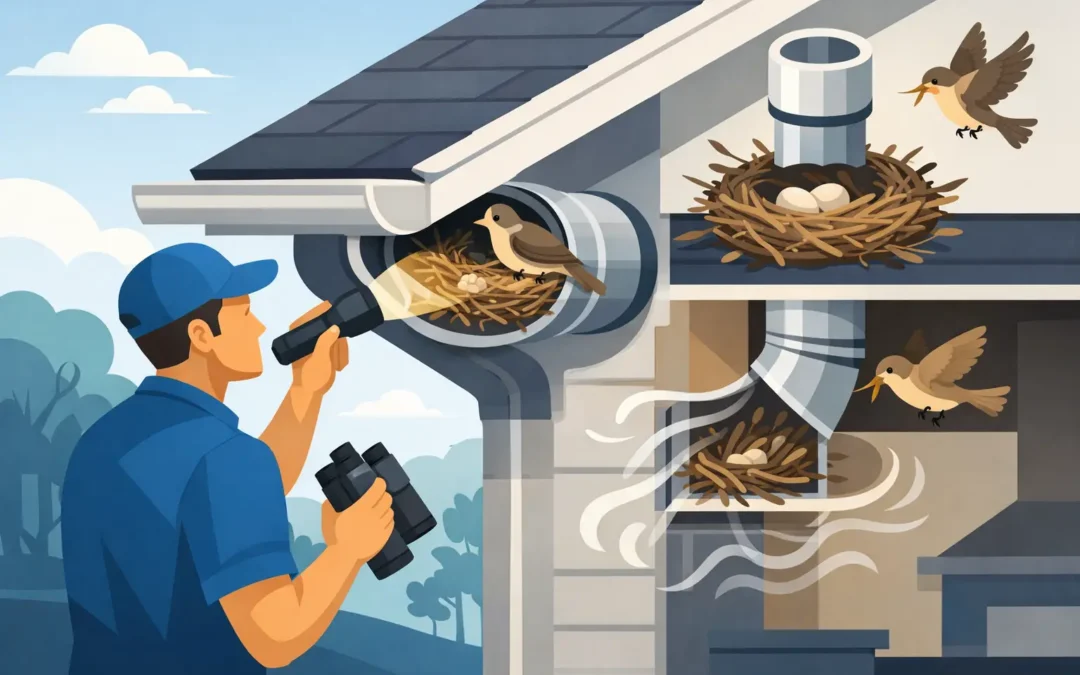
If your stove has started smoking into the room, your fire is slow to catch, or you can hear scratching and rustling above the fireplace, it is sensible to ask how to check for bird nest blockage before you light anything again. A blocked flue is not just inconvenient. It can stop fumes escaping properly, increase the risk of carbon monoxide problems, and leave a lot of mess behind if the nest drops into the fireplace.
In Leicestershire, bird nest blockages are a common spring and early summer issue, especially on chimneys that have not been used for a while. Jackdaws are the usual culprit. They are persistent birds and can build a surprising amount of nesting material in a short space of time. The trouble is that what looks like a few twigs from outside can be a tightly packed obstruction deeper inside the flue.
How to check for bird nest blockage safely
The first thing to say is this – do not light a fire to “see if it clears”. That can make the problem worse. If there is a nest in the flue, the smoke and heat have nowhere safe to go. You may end up with smoke backing into the room, fumes entering the property, or burning debris falling down into the fireplace or stove.
A safe check starts with paying attention to what has changed. If your chimney or stove was drawing properly before and now it is not, that matters. Bird nest blockages often show up quite suddenly. One week everything is fine, the next week the appliance struggles, the room smells smoky, or bits of twig appear in the hearth.
Start at ground level. Look inside the fireplace or stove with a torch when the appliance is cold and not in use. You may see small twigs, moss, feathers, nesting material, or droppings. In some cases, the lower part of the nest has already started to fall into the chamber. That is a strong sign that the flue above is obstructed.
Next, pay attention to air movement. With the appliance cold, open the stove door or fireplace opening and see whether there is any natural draw up the chimney. You might notice stale, sooty smells hanging in the room rather than being pulled upwards. This is not a perfect test because weather conditions can affect draw, but poor airflow alongside twigs or noise from above is often a clue.
You can also listen. Birds nesting in chimneys are not always quiet. Early in the morning especially, you may hear movement, chirping, scratching, or fluttering. If that sound is coming from the breast of the chimney or the flue above the fireplace, there is a fair chance nesting activity is involved.
Common signs a bird nest is blocking the flue
Some signs are obvious and some are easy to miss. A full blockage usually causes smoke spillage when you try to light the appliance. A partial blockage may be more subtle. The fire may be sluggish, harder to keep in, or produce more smell than usual.
You might also notice debris appearing without explanation. Twigs on the hearth, bits of straw in the stove, dust falling down the flue, or a sudden musty smell can all point to a nest above. Jackdaw nests in particular are often built from a jumble of sticks, and loose material can drop down before the whole blockage is visible.
Outside, if you can view the chimney pot safely from the ground, look for birds repeatedly flying to and from the same chimney. That pattern matters more than seeing a single bird perch there. Regular visits with twigs in their beaks usually mean nesting activity. What you should not do is climb onto the roof yourself to have a closer look unless you are properly equipped and experienced. A blocked chimney is not worth a fall.
What not to do when checking for a blockage
This is where good intentions can create bigger problems. Poking up the flue with whatever is at hand is a bad idea. You can compact the nest further, damage the liner, dislodge a large mass of material into the appliance, or disturb live birds during nesting season.
Vacuuming loose debris from the bottom might tidy the visible mess, but it will not solve the actual obstruction if the bulk of the nest is still higher up. Equally, trying to burn it out is dangerous. Nests are dry, packed, and unpredictable. If the flue is lined, forcing flames and excess heat through a blocked system is asking for trouble.
The legal side matters as well. Active bird nests can be protected. If birds are nesting, removal is not always straightforward and timing matters. That is one of the reasons a proper inspection is the sensible route rather than guesswork.
When a visual check is not enough
Sometimes the signs strongly suggest a nest, but you still cannot tell how far up the blockage is or how compact it has become. That is where a proper chimney inspection comes into its own. A CCTV inspection can show exactly what is happening inside the flue, whether it is definitely a nest, and whether there is anything else contributing to poor draw such as heavy soot deposits, damaged liners, or fallen masonry.
This matters because not every chimney problem is caused by birds. A customer may think they are dealing with a nest when the real issue is a combination of soot build-up and downdraught. Another may have a nest sitting on top of old debris from years of infrequent sweeping. The fix depends on the actual cause.
If the blockage is confirmed as nesting material, removal needs to be done thoroughly. Leaving part of it behind can still restrict the flue and continue causing smoke or ventilation issues. Once removed, the chimney should be checked again to make sure it is clear and safe to use.
How professionals check for bird nest blockage
A trained chimney sweep will usually start with the same common-sense signs you can spot yourself, then carry out a more reliable inspection. That may include checking the fireplace opening, assessing the draw, sweeping test material, and using CCTV equipment if the blockage is not immediately clear.
The advantage of a proper inspection is not just finding the nest. It is making sure the chimney system has not suffered any knock-on issues. Birds can force material deep into the flue. In older chimneys, that can catch on rough internal surfaces or weak points. In lined systems, there is also a need to avoid damaging the liner during removal.
For homeowners, that means less guesswork and less risk. A professional can tell you whether the appliance should stay out of use, whether the nest appears active, and whether a cowl should be fitted afterwards to help prevent repeat problems.
Preventing the next bird nest blockage
Once you know how to check for bird nest blockage, the next sensible step is stopping it happening again. Chimney cowls and bird guards are often the best long-term answer, but the right fitting depends on the type of appliance and flue. Not every cowl suits every chimney. Fit the wrong one and you can create draw problems instead of solving them.
Regular sweeping also helps. A clean, maintained flue is easier to inspect and less likely to hide developing issues. If your stove or fireplace sits unused for long periods, especially through spring, that can make the chimney more appealing to nesting birds. It is worth being more alert during that time.
For many households, the best approach is simple – if you notice smoke behaving differently, hear bird activity in the chimney, or find nesting material in the fireplace, stop using the appliance and get it checked properly. That is quicker, cleaner, and safer than hoping the problem will sort itself out.
At Thurnby Chimney Sweeps, we see this sort of issue regularly, and the same rule applies every time: a blocked flue needs proper attention before the fire goes back on. If something feels off with your chimney, trust that instinct. A careful check now is far better than a smoky room and a bigger repair later.