
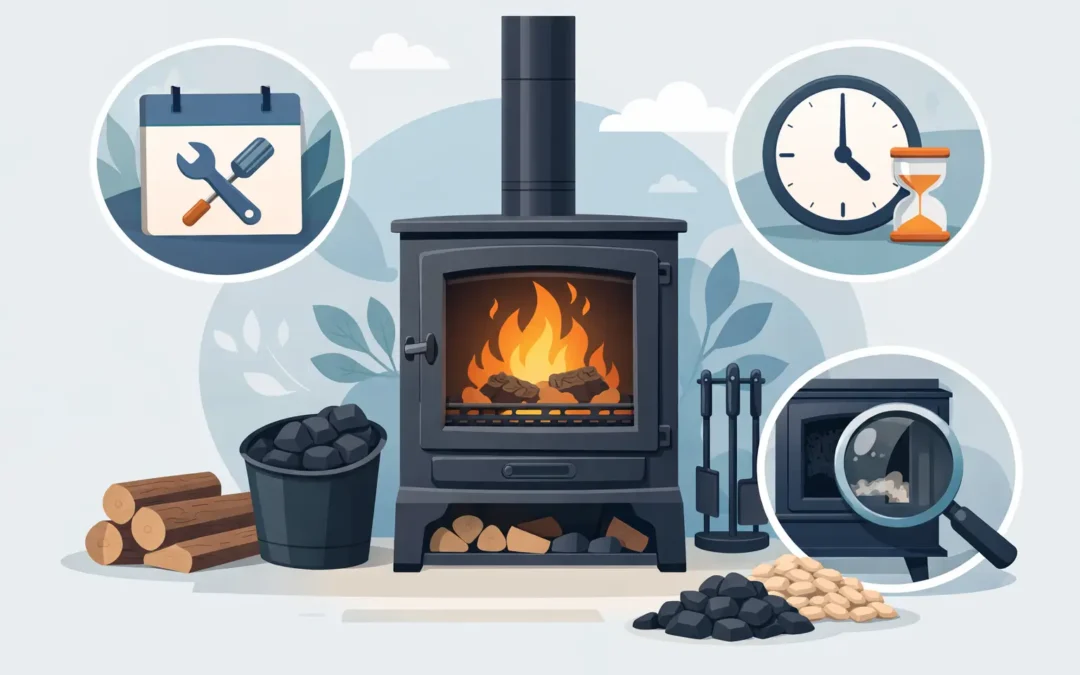
A stove often seems fine right up to the point it is not. One day it lights as normal, and the next it is drawing poorly, smoking into the room, burning through fuel too quickly or leaving the glass black after every use. That is usually when people start asking about a multi fuel stove service, but the better time to book it is before those problems show up.
If you rely on your stove through the colder months, regular servicing is part of keeping it safe, efficient and dependable. Like any appliance that deals with heat, fire and airflow, wear builds up slowly. Seals harden, fire bricks crack, moving parts stiffen and the flue system can develop faults that are easy to miss if nobody checks it properly.
What a multi fuel stove service actually covers
A proper multi fuel stove service is not just a quick look over the front of the appliance. The aim is to check that the stove is operating as it should, that key parts are still sound, and that there are no warning signs pointing to a bigger issue in the flue or chimney system.
That usually starts with the condition of the stove body, door, glass and rope seals. If the rope seals have become loose or compressed, the stove can pull too much air and burn less efficiently. It can also become harder to control. Hinges, catches and air controls are also checked because these are the parts householders use every day and they naturally wear over time.
Inside the appliance, attention turns to components that take the most punishment. Fire bricks, baffles, grate bars and ashpan areas all need inspection. In a multi-fuel stove, the grate and riddling mechanism are especially important because they help the appliance cope with different fuels and maintain proper airflow from below. If these parts are damaged or warped, performance drops and other parts of the stove can end up under more strain.
A service should also consider the wider system. A stove does not work in isolation. The flue, chimney, cowl and ventilation arrangements all affect how safely and efficiently it runs. If a stove is repeatedly giving trouble, the fault may not be the stove itself.
Why regular servicing matters
Most people book maintenance for one of two reasons – safety or performance. In truth, the two are closely linked.
When a stove is not sealing properly or the flue is not drawing as it should, combustion becomes less clean and less controlled. That can lead to smoke issues, tar deposits, poor heat output and unnecessary strain on the appliance. Left too long, minor defects can become more expensive repairs.
Servicing also helps pick up the sort of faults that householders tend not to spot straight away. A cracked fire brick might not seem urgent, but it can allow heat to reach areas of the stove that are not designed to take it directly. A damaged baffle can affect airflow and combustion. A worn rope seal can make the stove difficult to regulate, which often means wasted fuel and inconsistent burning.
For homes in and around Leicestershire, where many properties have a mix of older chimneys and newer stove installations, routine checks are especially sensible. A sound appliance still depends on a sound flue system behind it.
Signs your stove may need attention sooner
Some stoves are serviced every year without ever causing obvious trouble. That is ideal. Others start showing warning signs well before the next planned appointment.
If smoke is entering the room when you light the stove or refuel it, something is not right. The cause may be poor draw, a partial blockage, a ventilation issue or a fault with the appliance setup. If the glass blacks up unusually fast, that can point to poor combustion, wet fuel or air control issues. If the stove is suddenly harder to light, slower to get going or not producing the heat you would expect, servicing is worth arranging.
You may also notice doors no longer closing firmly, controls becoming stiff, or rattling internal parts. Those are not just niggles. They can be signs that components are worn and need checking before regular use continues.
A strong smell from the stove when not in use can also be a clue. Sometimes that comes down to deposits in the flue or draught changes, and sometimes it points to a chimney problem rather than the appliance itself.
How often should a multi fuel stove service be booked?
For most households, once a year is a sensible rule. That gives you a chance to catch wear before the main heating season starts and helps keep the appliance working as it should.
The best time is usually late spring through to early autumn. Waiting until the first cold spell often means joining the rush, and that is when people discover faults just as they need the stove most.
That said, usage matters. A stove used occasionally in a sitting room may wear differently from one that is the main heat source for the house. If you burn fuel heavily through the winter, or if the stove has had a hard season, an annual service becomes even more worthwhile. If there have been recurring draw problems, smoke spillage or issues with bird activity in the chimney, earlier inspection may be needed.
Servicing and sweeping are also not the same job, although they often go hand in hand. A chimney sweep deals with soot, creosote and blockages in the flue. A stove service focuses on the appliance and its condition. Many homes need both as part of sensible routine maintenance.
What can happen if servicing is ignored
The short answer is that small faults rarely stay small.
A worn door seal can mean wasted fuel and poor control at first, but over time it may contribute to overheating and unnecessary internal wear. Broken fire bricks can lead to damage inside the stove body. A failing baffle can reduce performance and alter the way gases move through the appliance. If the stove is working against a blocked or poorly performing flue, the problem can become a safety issue rather than just an inconvenience.
There is also the question of lifespan. Stoves are built to last, but not if neglected. Regular care is usually far cheaper than replacing major components after preventable damage.
Choosing the right person for the job
This is not an area where guesswork helps. A stove may look straightforward from the outside, but proper servicing needs someone who understands appliance wear, flue behaviour and solid fuel safety.
That matters even more if your property has an older chimney, a liner, a twin wall system or a history of smoking and downdraft problems. In those cases, the appliance can only be judged properly by looking at the system as a whole.
Homeowners tend to feel more confident when they know the person attending is trained, experienced and used to working with both routine maintenance and fault finding. That is one reason many local customers prefer a firm that can sweep, service, inspect and diagnose rather than only doing one part of the job. At Thurnby Chimney Sweeps, that practical joined-up approach is a big part of what customers value.
A quick word on fuel and day-to-day care
Good servicing does not replace good habits. Burning the right fuel, using dry seasoned wood where suitable, avoiding slumbering the stove for long periods and emptying ash sensibly all help reduce unnecessary wear.
Multi-fuel stoves give you flexibility, but they still need to be used correctly. Some problems that look like appliance faults are actually caused by fuel quality or poor burning practice. On the other hand, not every problem can be solved by changing fuel. That is why a proper inspection matters when performance drops – it separates normal maintenance issues from operating issues and bigger system faults.
Multi fuel stove service and peace of mind
Most people are not looking for technical detail when they book a service. They want to know the stove is safe to use, likely to perform properly and less likely to let them down on a cold evening.
That peace of mind is the real value of a multi fuel stove service. You are not waiting for smoke in the room, a stubborn door, a cracked brick or a poor draw to tell you something is wrong. You are dealing with the stove before minor wear turns into an avoidable problem.
If your stove has not been checked for a while, or if it is showing signs that something is not quite right, getting it looked at sooner rather than later is usually the sensible call. A well-maintained stove is easier to light, easier to control and far easier to trust when winter sets in.