
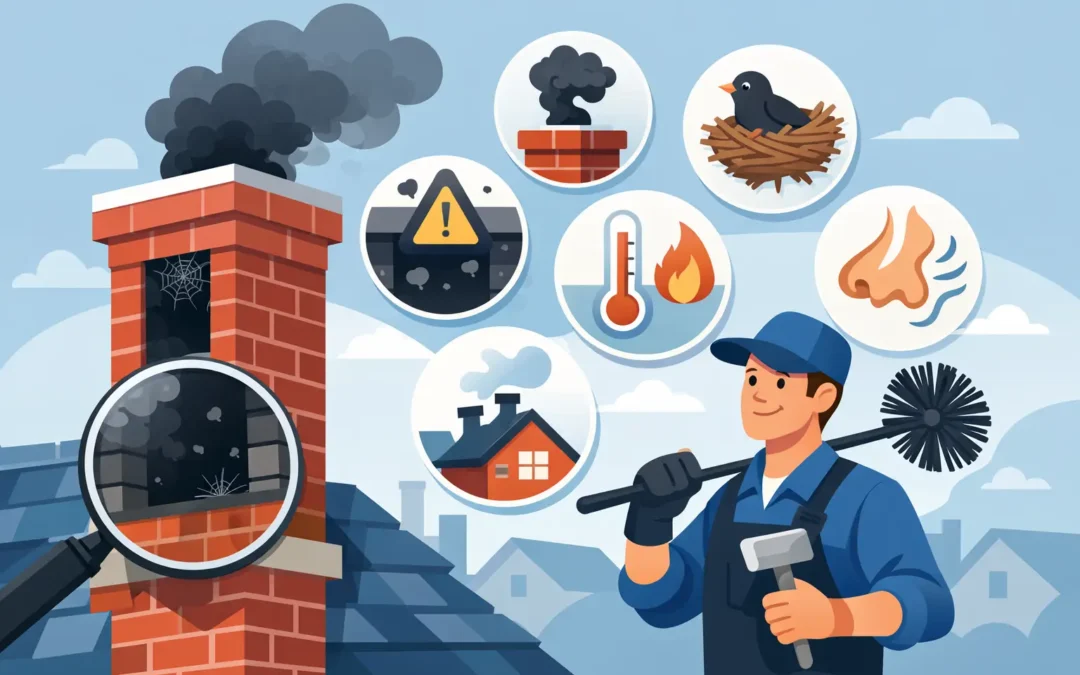
You usually notice chimney trouble at the worst possible moment – when you light the fire on a cold evening and smoke starts drifting back into the room. In many homes, the early signs your chimney needs cleaning are easy to miss until the problem becomes messy, inconvenient, or unsafe. A chimney does not have to be completely blocked to cause issues. Even a gradual build-up of soot, creosote or debris can affect how well your fire or stove works.
If you use a wood burner, multi-fuel stove, open fire or any appliance connected to a flue, regular sweeping is part of keeping your home safe. Some warning signs are obvious, while others are more subtle. Here are the ones worth taking seriously.
The most common signs your chimney needs cleaning
Smoke is coming back into the room
This is one of the clearest warning signs. If smoke enters the room instead of rising cleanly up the chimney, something is not working as it should. That could mean soot build-up has narrowed the flue, a bird nest is causing a blockage, or the chimney simply needs a proper sweep after a period of regular use.
It is worth saying that smoke blowback does not always mean the same thing. Sometimes poor ventilation, downdraught or an issue with the appliance setup can also play a part. But if smoke is backing up and the chimney has not been swept recently, cleaning is one of the first things to check.
You can smell soot or a strong smoky odour
A stale, smoky smell around the fireplace, especially when the fire is not lit, often points to soot deposits or residue inside the flue. In warmer weather, these smells can become more noticeable because air movement changes and odours are pushed back into the room.
Some homeowners put this down to an old fireplace just smelling like a fireplace. That is not always the case. A lingering odour can be a sign that deposits have built up and need removing. If the smell has become stronger than usual, it is sensible to get the chimney inspected and swept.
Soot is falling into the fireplace
If you notice bits of soot, dust or black debris dropping into the hearth or stove, the inside of the chimney may be carrying a heavier build-up than it should. A small amount of residue is normal with solid fuel use, but fresh debris falling down is a sign that the flue needs attention.
This can also happen when there is a nest or loose material higher up in the chimney. In older properties, crumbling internal surfaces can add to the mess as well. A sweep can usually tell the difference quickly and advise if cleaning alone is enough or if repairs are needed.
Your fire is harder to light or keep going
A healthy chimney helps draw air properly, which is what allows a fire or stove to burn well. If fires are slow to catch, keep going out, or seem to struggle even with dry fuel, poor draw may be part of the problem.
That does not automatically mean the chimney is dirty. Wet logs, poor-quality fuel and closed vents can all cause similar issues. Still, if your appliance used to perform well and now does not, a blocked or partially restricted flue is a strong possibility. Sweeping often improves performance straight away.
Less obvious signs worth paying attention to
Black, tar-like deposits inside the chimney or stove
Not all soot is the same. If you can see thick black deposits that look shiny, sticky or tarry, that may be creosote. This is more serious than ordinary loose soot because it is highly flammable and much harder to remove once it has built up.
Creosote tends to form when wood is not fully seasoned, when fires burn too cool, or when the flue is not swept often enough. It can build gradually without much warning until it becomes a real fire risk. If you spot this type of residue, it is best not to leave it for another season.
Birds, nesting material or unusual debris
Spring and early summer are common times for bird nest problems, but they can turn up at other times too. Twigs, feathers and nesting material can block a flue surprisingly quickly. Sometimes the first sign is poor performance. Sometimes you hear movement or scratching sounds from the chimney breast.
A standard sweep can deal with soot, but bird nests need the right approach and timing. If you suspect nesting material, it is better to have it checked properly rather than continue using the fire and hope it clears itself.
More soot than usual on the stove glass or around the fireplace
A dirty stove glass now and then is normal, especially with certain fuels or low-burning fires. But if the glass is blackening faster than usual, or you are seeing heavier soot marks around the opening of the fireplace, that can suggest the flue is not venting efficiently.
Again, this is one of those signs where context matters. Burning damp wood will create more deposits, and some appliances are more sensitive than others. But a noticeable change in soot levels is often an early clue that sweeping is overdue.
When the problem may be more than cleaning
The chimney was swept, but the issue is still there
If you have already had the chimney cleaned and the smoke problems, smells or poor draw continue, there may be another fault at play. This is where experience matters. A flue liner issue, a damaged chimney pot, poor terminal design or a downdraught problem can all produce similar symptoms.
This is also why a proper chimney service is not just about running brushes through the flue and leaving. Sometimes a CCTV chimney inspection is the sensible next step, especially if the appliance is being used regularly and the symptoms keep returning.
You have moved into a property and do not know the chimney history
This is a common one. New owners often inherit a fireplace or stove with no clear record of when it was last swept, what fuel was used, or whether the chimney lining is in good order. Even if everything appears to work, it is worth having the system checked before making regular use of it.
Older properties in particular can hide all sorts of issues, from old nests to heavy tar deposits to internal defects. Starting with a clean, checked chimney gives you a proper baseline and a lot more peace of mind.
How often should a chimney be swept?
It depends on the appliance and the fuel you burn. Wood-burning and multi-fuel appliances generally need regular sweeping, and open fires can require more frequent attention depending on use. Smokeless fuel, seasoned logs, burning habits and the condition of the flue all make a difference.
As a rule, if you use your fire or stove regularly through the heating season, do not wait for an obvious problem before booking a sweep. Preventative maintenance is usually simpler and cheaper than dealing with a blocked flue, a smoky room or the aftermath of a chimney fire.
For homeowners across Leicestershire, that regular check can also pick up issues like bird nests, damaged liners or cowl problems before they become bigger jobs.
Why acting early matters
A dirty chimney is not just untidy. It can affect safety, appliance efficiency and indoor air quality. Soot and creosote build-up increase the risk of chimney fires. Partial blockages can interfere with ventilation and lead to smoke and harmful gases staying where they should not.
The earlier you deal with the signs, the easier the fix usually is. In many cases, a routine sweep is all that is needed to get things working properly again. If something more is going on, finding it early gives you more options and helps avoid avoidable damage.
At Thurnby Chimney Sweeps, we often find that customers call after noticing a small change – a stronger smell, a bit of soot falling, a fire that will not quite draw properly. That is exactly the right time to get it looked at.
If your fireplace or stove has not felt quite right lately, trust your instincts. Chimneys rarely improve by being ignored, and a clean, well-maintained flue makes all the difference when you want safe, dependable heat at home.