
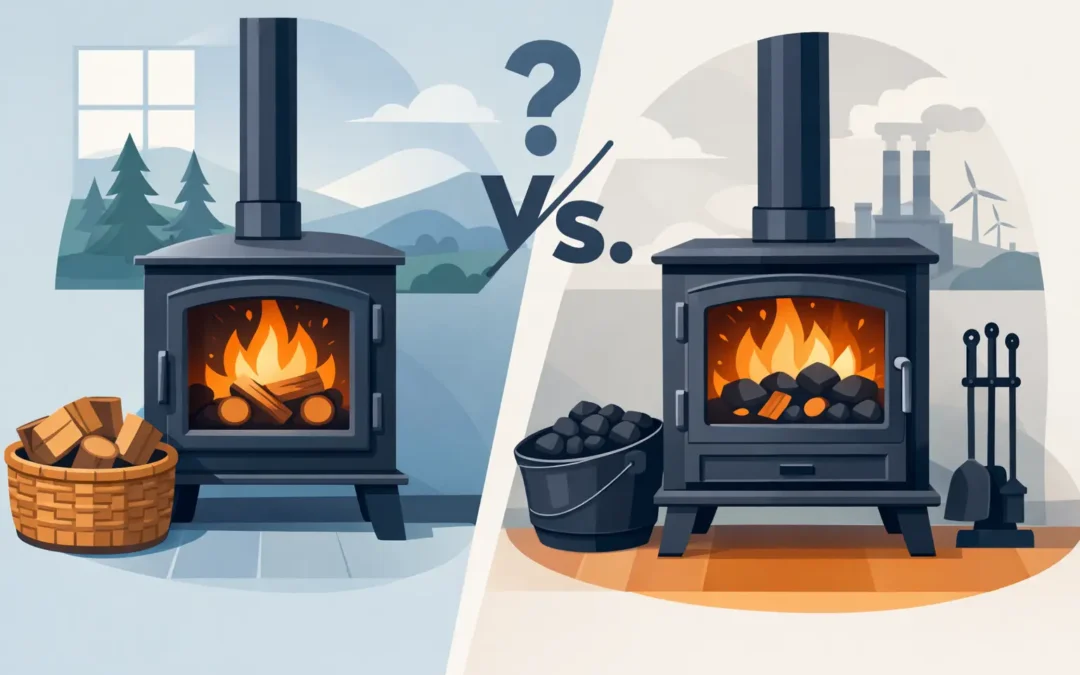
You usually notice the difference when it comes time to buy fuel. One stove is built around seasoned logs and does that job well. The other gives you more choice. If you are weighing up a log burner vs multi fuel stove, the right answer depends less on fashion and more on how you live, what fuel you can store, and how much day-to-day upkeep you are happy with.
For many households, both options can heat a room well and create the same cosy focal point. Where they differ is in the way they burn, the type of grate inside, the air flow, and the sort of maintenance the flue and appliance will need over time. That matters because the wrong stove for your routine often becomes a nuisance, even if it looked like a good deal at the start.
Log burner vs multi fuel stove: the core difference
A log burner is designed specifically for burning wood. In most cases, logs burn best on a bed of ash, with air feeding the fire in the right way for timber. A multi fuel stove is built to handle wood as well, but it can also burn approved smokeless fuels if the appliance is designed and set up for them.
The key difference inside the stove is the grate. A dedicated wood burner often has a flat base or a simple arrangement that suits logs burning on ash. A multi fuel stove usually has a raised grate and ash pan underneath, because mineral fuels need air coming from below to burn properly.
That might sound like a small design detail, but in practice it changes how the stove performs and how you use it. A household that wants the flexibility to switch fuels during winter may find a multi fuel stove more practical. A household committed to properly seasoned or kiln-dried wood may prefer the simplicity of a log burner.
Which stove is better for everyday use?
This is where it depends on the home and the person using it. If you mainly want the look, sound and feel of a real wood fire, a log burner often makes perfect sense. It is straightforward, and when it is run on the right fuel, it can be very effective.
A multi fuel stove suits people who want options. If wood prices change, if log storage is awkward, or if you prefer a longer-lasting fuel bed at certain times, the added flexibility can be useful. Some homeowners like using logs in the evening for atmosphere and approved smokeless fuel when they want a slower, steadier burn.
That said, flexibility is only helpful if you actually use it. If you know you will only ever burn wood, there is no great benefit in paying for a stove feature you do not need.
Fuel supply matters more than many people expect
Before choosing a stove, think about what fuel is realistically available to you. If you have space for dry log storage and a reliable supplier of quality wood, a log burner can be a very good fit. If storage is limited or you want the option to keep another approved fuel on hand, a multi fuel stove may suit your routine better.
Poor fuel causes a lot of avoidable trouble. Wet wood creates more smoke, more soot and more tar deposits in the flue. That affects stove performance and increases the need for sweeping and maintenance. Whatever appliance you choose, the fuel has to be right for it.
Running costs and efficiency
People often ask which is cheaper to run, but there is no single answer. Running costs depend on local fuel prices, the quality of the fuel, how often the stove is used, and how well the room and chimney setup draw.
Wood can be cost-effective if you buy well and store it correctly. But cheap logs that are too damp are false economy. They give less useful heat and leave more deposits behind. Smokeless fuels can offer a longer burn in some appliances, but prices vary and the stove must be suitable for them.
Efficiency also depends on the stove model, installation quality and how it is operated. A well-installed appliance with the right flue liner, suitable ventilation and correct fuel will usually outperform a badly installed or poorly maintained one, whatever name is on the brochure.
Do multi fuel stoves burn hotter?
Not always. A multi fuel stove is not automatically hotter or better. What matters is the stove’s design, output rating and fuel type. Some fuels can produce a different style of heat and burn profile, but that does not mean every multi fuel appliance will outperform a dedicated wood burner in every home.
The better question is whether the stove is correctly sized for the room. Too large, and it may be slumbered too much, which is bad for clean combustion. Too small, and it will struggle to keep up.
Maintenance, sweeping and ash
From a practical point of view, this is one of the most important parts of the log burner vs multi fuel stove decision. Both need regular sweeping, routine checks and sensible operation. Neither is fit-and-forget.
Wood burning tends to produce soot and, if the wood is not dry enough, tar and creosote in the flue. Multi fuel use can create a different ash pattern and residue, depending on what is burned. In both cases, the chimney and appliance need looking after properly.
A multi fuel stove often produces more ash because of the grate and ash pan setup. That is not a problem in itself, but it does mean more regular emptying and good housekeeping around the stove. A log burner can feel a bit simpler in daily use if wood is your only fuel and you are used to managing a bed of ash.
Sweeping frequency depends on use and fuel type, but regular maintenance is not optional. A neglected flue can lead to poor draw, smoke spillage, unpleasant smells and increased fire risk. This is one reason many homeowners prefer using one reliable local company for both sweeping and stove-related advice, rather than trying to piece it together themselves.
Smoke control and compliance
This part is often overlooked until somebody is already using the stove. Depending on where you live, smoke control rules may affect what appliance and fuel you can use. The stove must be suitable, and the fuel must be appropriate too.
That is another reason not to choose on price alone. A bargain stove that is wrong for the property, chimney or area can become expensive very quickly. Good installation advice at the start saves a lot of hassle later.
If you are unsure, ask before buying. It is far better to check the appliance, flue requirements and fuel options in advance than to deal with smoke problems or compliance questions once the stove is in place.
What suits your home best?
A log burner is often the better choice if you want to burn wood only, you have a dependable log supply, and you prefer a simpler appliance centred around that one fuel. It suits households that enjoy the character of a wood fire and are happy to keep good fuel stored properly.
A multi fuel stove is often the better choice if you want flexibility, if fuel availability changes through the year, or if you want the option of approved smokeless fuel as well as logs. It can be a sensible fit for homes where practicality matters as much as atmosphere.
The chimney setup also plays a part. The condition of the flue, the need for a liner, the height of the chimney and any history of poor draw or downdraught all affect how well the stove will perform. In our trade, we often find that what looks like a stove issue is really an installation or flue issue.
The best choice is the one you will use properly
There is no prize for buying the most flexible stove if you only ever wanted a wood fire. Equally, there is little point choosing a log burner and then wishing every winter that you had another fuel option. The right appliance is the one that fits your fuel supply, your storage space, your chimney system and the way you actually heat your home.
If you are still undecided, get practical advice before you commit. A proper look at the fireplace opening, chimney condition and intended fuel usually tells you more than any showroom label. Thurnby Chimney Sweeps sees this first-hand – the homes that get the best results are usually the ones where the stove, flue and fuel were matched properly from the start.
A stove should make life warmer and simpler, not give you extra problems to sort out once the weather turns cold.