
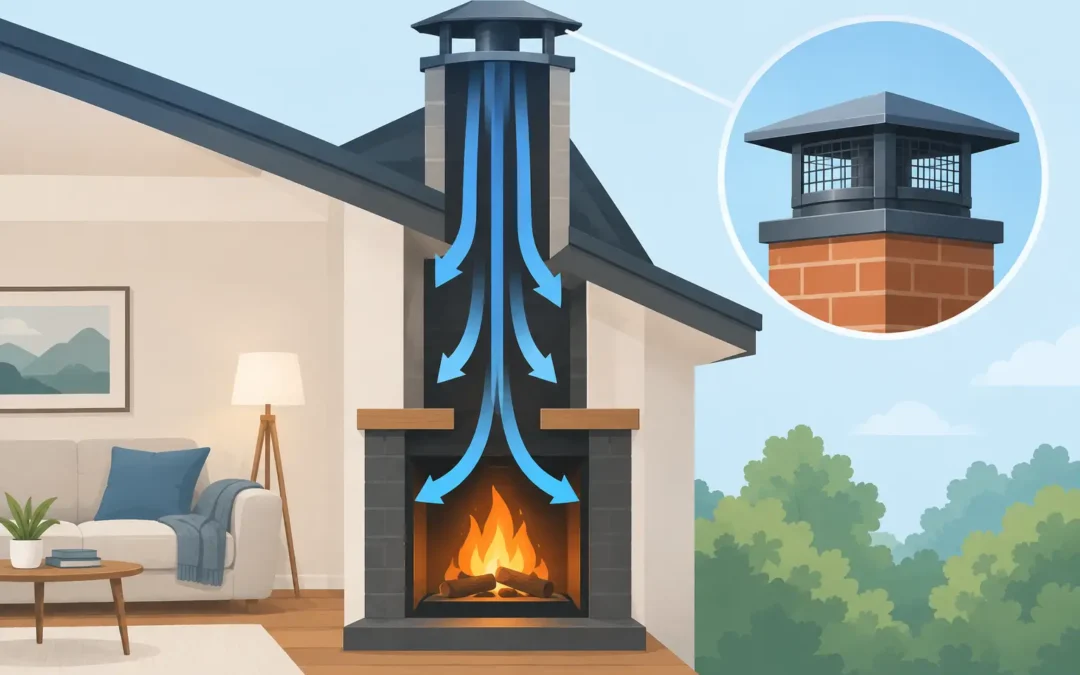
Smoke spilling into the room when you light the stove is not something to put up with. Effective chimney downdraught solutions start with finding out why the flue is failing to draw properly, rather than simply fitting a cap and hoping for the best. A smoky fireplace or stove can be unpleasant, but it can also indicate a safety issue that needs dealing with before the appliance is used again.
Downdraught is a common problem in some Leicestershire homes, particularly where chimneys are exposed to strong winds, sit below a roofline or nearby trees, or serve a modern, well-sealed room. The right fix depends on the chimney, the appliance and the way air moves around your property.
What is chimney downdraught?
A chimney should draw combustion gases upwards and safely out of the property. Downdraught happens when air pressure or wind forces air down the chimney instead. You may notice smoke coming into the room, a smell of soot, a fire that is difficult to keep lit, or cold air blowing through an unused fireplace.
With a wood-burning or multi-fuel stove, poor draw can stop the appliance performing as it should. When the door is opened to refuel, smoke may escape into the room. In more serious cases, combustion gases, including carbon monoxide, may not clear safely through the flue.
A little smoke when lighting a completely cold stove can happen, especially in mild weather. Repeated smoke problems, fumes in the room or an alarm sounding are different matters. Stop using the appliance and arrange for it to be checked.
Why a chimney can blow smoke back indoors
There is rarely one universal answer. A proper inspection looks at the whole system, from the appliance and air supply to the flue terminal above the roof.
Wind and the position of the chimney pot
Wind passing over a roof can create areas of high or low pressure. If a chimney pot is too short, sits close to a taller roof section, or is affected by neighbouring buildings and mature trees, the wind can push down into the flue. This is often worse from one particular direction and may only happen on blustery days.
A suitable anti-downdraught cowl can help in these situations. However, not every cowl suits every chimney or fuel type. The wrong fitting can restrict the flue, collect soot, or make sweeping more difficult.
A cold or oversized flue
Warm flue gases rise. When a flue is cold, uninsulated or too large for the stove connected to it, those gases cool quickly and the draw can be weak. This is particularly common with open fireplaces and older chimneys that have not been lined for a modern stove.
A flue liner of the correct diameter can improve performance, but lining is not a quick cure for every problem. It must be correctly specified for the appliance, installed properly and supported by a sound chimney structure.
Not enough replacement air
Your stove needs air to burn, and the chimney needs replacement air to carry gases upwards. Modern doors, windows and insulation make homes far less draughty than they once were. A kitchen extractor fan, bathroom fan or tumble dryer can then create negative pressure and pull smoke back into the room.
A simple test can be revealing. If the stove behaves better with a nearby window slightly open, inadequate ventilation may be part of the problem. This does not mean leaving a window open is the permanent answer. A suitable permanent air vent may be needed, particularly where building regulations require one.
Blockages, poor maintenance and bird nests
Soot deposits, fallen masonry, cobwebs and birds’ nests all reduce the effective size of a flue. Even a partial obstruction can affect draw and increase the risk of fumes entering the property. Chimneys should be swept at appropriate intervals for the fuel being burned, and a visual check alone cannot confirm the full length of the flue is clear.
A CCTV chimney inspection is useful where the cause is not obvious. It allows the inside of the flue to be checked for blockages, damaged liners, bends, loose debris or construction issues without guesswork.
Chimney downdraught solutions that address the cause
The best solution is the least invasive one that safely resolves the problem. After sweeping and inspecting the chimney, the next step may be a straightforward cowl fitting, a ventilation assessment or more detailed flue work.
Fit the right chimney cowl
Anti-downdraught cowls are designed to reduce the effect of wind across the top of the chimney while allowing flue gases to escape. They can work very well where wind direction is the main cause of the issue. There are different designs for solid fuel appliances, gas appliances and disused chimneys, so selecting the correct type matters.
A cowl also needs to be securely fitted and accessible for future sweeping. A cheaply fitted terminal can create more trouble than it solves, particularly if it rattles loose or becomes blocked with soot.
Improve the flue height or terminal position
Where the chimney is in a sheltered pocket or below the pressure zone created by the roof, raising the pot or altering the terminal height may improve draw. This needs careful assessment. Height alone is not always the answer, and any changes must remain stable, weatherproof and suitable for the chimney stack.
The condition of the flaunching should be checked at the same time. Cracked or failing flaunching can allow water into the stack and weaken the bedding around pots and cowls.
Make sure the room has enough ventilation
If the property is tightly sealed or extractor fans are influencing the stove, additional ventilation can make a significant difference. The position and size of an air vent should be considered properly, rather than drilling a hole at random. The aim is to provide the appliance with the air it needs without making the room unnecessarily cold or uncomfortable.
Never block an existing air vent to stop a draught. That vent may be essential to the safe operation of the stove or fireplace.
Repair or line a failing flue
A damaged chimney liner, an oversized flue or internal defects may call for chimney lining or repairs. A correctly fitted liner helps keep gases warmer, promotes a better draw and provides a safer route for combustion products. It is a more involved job than fitting a cowl, but it can be the proper long-term answer for an older chimney serving a stove.
The appliance, flue size, chimney route and fuel type all need to be taken into account. This is why an inspection should come before a recommendation.
Checks you can make before calling a professional
Do not climb onto the roof or attempt to remove a cowl yourself. There are, however, a few useful observations to pass on when booking an inspection. Note whether the problem occurs only in certain wind directions, whether it improves with a window ajar, and whether an extractor fan is running at the same time. Also note when the chimney was last swept and whether the issue began after any building work, new windows or a change of appliance.
Use dry, properly seasoned wood if you have a wood burner. Wet fuel creates cooler, dirtier smoke, which makes lighting harder and increases soot deposits. Start the fire with a good bed of kindling and adequate air controls open, particularly when the flue is cold.
If smoke enters the room heavily, you smell fumes, feel unwell, or a carbon monoxide alarm sounds, put safety first. Ventilate the room if safe to do so, leave the appliance off and seek urgent advice. A carbon monoxide alarm is an essential backup, but it is not a replacement for a correctly installed and maintained chimney system.
When an inspection is the sensible next step
A recurring downdraught issue deserves more than a trial-and-error fix. A qualified chimney professional can sweep the flue, assess the appliance installation, inspect the terminal and identify whether wind, ventilation, blockage or flue condition is behind the problem. At Thurnby Chimney Sweeps, this can include CCTV inspection and practical recommendations, from cowl fitting to chimney lining where required.
A fire or stove should make your home feel warm and comfortable, not leave you watching for smoke. Getting the cause checked properly gives you a safer system and a much better chance of enjoying it with confidence.