
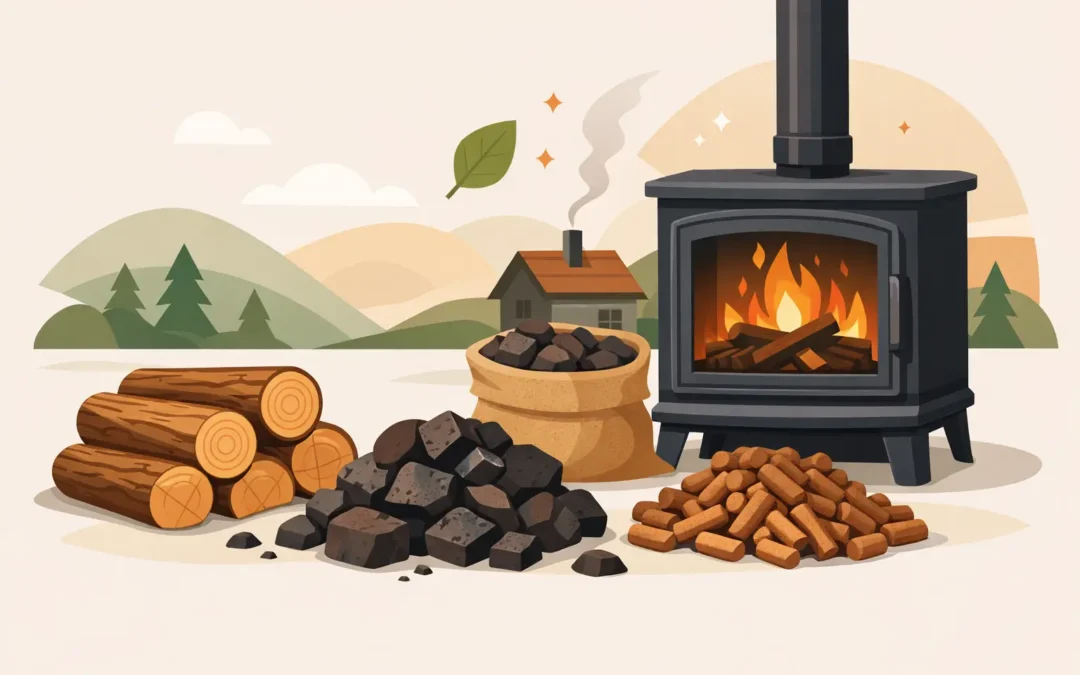
A stove can look the part and still perform poorly if the fuel going into it is wrong. We see it regularly – blackened glass, sluggish fires, excess smoke and chimneys that soot up far too quickly. When people ask about the best fuels for wood burners, the short answer is simple: dry, properly seasoned or kiln-dried wood is usually the right place to start. The longer answer matters, because the best choice depends on your stove, how often you use it and whether you want heat output, convenience or a longer burn.
What makes the best fuels for wood burners?
For most households, the best fuel burns hot, lights without a struggle and produces as little smoke and tar as possible. That is what helps your stove run efficiently and helps your flue stay cleaner for longer.
Moisture content is the biggest factor. Wood with too much water in it wastes heat because the stove has to drive off that moisture before the logs can burn properly. Instead of a lively flame and steady heat, you get hissing, smouldering, dirty glass and more deposits in the flue. As a rule, wood for a burner should be below 20% moisture content. That is why kiln-dried logs are so popular, and why properly seasoned logs can also work well if they have been stored correctly.
The species of wood matters too, but less than many people think. A dry log of the “wrong” species is often better than a wet log of the “right” one.
Kiln-dried logs
If you want reliable performance with the least guesswork, kiln-dried logs are hard to beat. They are dried in controlled conditions to reduce moisture content, which means they catch more easily, burn hotter and give off less smoke than damp logs.
For many homeowners, especially those using a stove in the evenings or at weekends, this is the easiest option. You know what you are getting, the logs are ready to use and there is less risk of poor burning caused by bad storage. They also tend to leave less residue in the appliance and flue, which is good news from a maintenance point of view.
The trade-off is cost. Kiln-dried wood usually costs more than seasoned logs bought in bulk. Still, if it burns more efficiently and causes fewer problems, it can be better value than it first appears.
Seasoned logs
Seasoned logs can be an excellent fuel if they have genuinely had enough time to dry and have been stored under cover with good airflow. This is where a lot of people get caught out. Wood sold as “seasoned” is not always as dry as it should be, especially if it has been left exposed to the weather or stacked badly.
Good seasoned hardwood logs can provide strong heat and a steady burn. If you buy seasoned wood, it is worth checking moisture with a meter rather than relying on description alone. The difference between 18% and 28% moisture is the difference between a stove working well and a stove that is a chore to use.
If you have space to store logs properly and you are organised enough to buy ahead, seasoned wood can be a practical and cost-effective choice.
Hardwood or softwood?
This is one of the most common questions. Hardwood has a reputation for being superior, but the reality is more balanced.
Hardwoods such as ash, beech and oak are denser, so they tend to burn longer and give a steadier heat. That makes them a good choice for keeping a room warm over the evening. Oak in particular can be excellent, but only when it is properly dry. If it is not, it can be troublesome.
Softwoods such as pine and spruce catch quickly and burn hotter and faster. That can make them useful for getting a fire going or bringing the stove up to temperature. The old idea that softwood should never be burned is too simplistic. Dry softwood can burn perfectly well in a wood burner. The issue is that because it burns faster, you may use more of it, and poor-quality softwood can produce more sparks and resin-related deposits if it is not dry.
In practice, many households do well with a mix – softwood for kindling and starting the fire, followed by good dry hardwood logs for a longer, steadier burn.
Smokeless fuel and other manufactured fuels
If you have a dedicated wood-burning stove, stick to wood unless the manufacturer says otherwise. Not every appliance is designed to burn smokeless coal or manufactured briquettes, and using the wrong fuel can damage the stove or shorten its life.
That said, some homeowners have multi-fuel stoves rather than true wood burners. In those cases, approved smokeless fuels may be suitable and can offer a long burn with strong heat output. They can be useful where people want overnight heat retention or a more controllable, slower burn.
The key point is to check the appliance specification first. Fuel choice is not just about what burns – it is about what burns safely and correctly in your particular stove.
Wood briquettes
Wood briquettes are compressed blocks made from dried wood waste such as sawdust or shavings. The better ones are very dry, compact and efficient, which means they can produce a lot of heat for their size.
They can be a very good option for households wanting a clean, consistent fuel. Because the moisture content is low, they often burn more predictably than poor-quality logs. Storage is usually neat and straightforward too.
There are a couple of things to watch. Some briquettes expand as they burn, and some produce a lot of heat very quickly, so you need to use them sensibly and not overload the stove. They are not all the same, either. Quality varies, and cheap briquettes are not always good value.
Fuels to avoid in a wood burner
A surprising amount of stove trouble starts with people burning whatever is to hand. That nearly always costs more in the long run.
Wet or green wood is the main one to avoid. It creates smoke, tar and soot, gives poor heat and increases the risk of creosote build-up in the flue. Painted, treated or varnished wood should also stay out of the stove, as should MDF, chipboard and household rubbish. These materials can release harmful fumes and leave heavy residues in the appliance and chimney.
Coal is another one to treat carefully. Standard house coal is not suitable for many modern appliances and is subject to tighter rules. If you have a multi-fuel stove and want to use a solid fuel, use only what the manufacturer permits.
The best fuel also depends on how you use the stove
Someone who lights the stove a few evenings a week may be best served by kiln-dried logs for convenience and clean burning. A household heating a room for long stretches through winter may prefer bulk-bought seasoned hardwood, provided storage is good and moisture is checked.
If quick lighting matters, softwood kindling and a few smaller dry logs make life easier. If slower, longer heat matters, denser hardwoods often perform better. There is no single best answer for every property.
What does stay the same is this: dry fuel nearly always wins.
Why fuel quality affects chimney safety
Poor fuel does not just make the stove less enjoyable to use. It has a direct effect on your chimney and flue system. Damp wood and smoky fires create more soot and tar deposits, which means the chimney can block more quickly and may be at greater risk of a chimney fire.
This is one reason regular sweeping matters. Even with good fuel, a working stove and flue need proper maintenance. With poor fuel, the need becomes even more pressing. At Thurnby Chimney Sweeps, we often find that recurring smoke or performance issues come back to fuel quality just as much as appliance faults.
How to tell if your fuel is the problem
There are a few clear signs. If the logs hiss or bubble at the ends, they are probably too wet. If the stove glass blacks up quickly every time you use it, damp fuel may be part of the issue. A fire that struggles to stay lively with the air controls open is another clue.
You may also notice a heavy smoky smell outside, a lot of visible smoke from the chimney, or ash and soot building up faster than expected. Any one of these can point to poor fuel, poor burning technique or a flue problem, and sometimes a combination of all three.
A sensible choice for most homes
For most homeowners, the best fuels for wood burners are kiln-dried logs or properly seasoned logs with a moisture content below 20%. If you want the easiest, most dependable option, kiln-dried is often worth paying for. If you have the space, buy carefully and store logs well, seasoned hardwood can serve you just as well.
A stove should give steady heat, clear flames and peace of mind, not smoke in the room or constant cleaning. Start with dry fuel, use only what your appliance is designed for, and if the stove still is not burning as it should, it is worth having the chimney and flue checked. A small change in what you burn can make a big difference to how safely and efficiently your whole system works.