
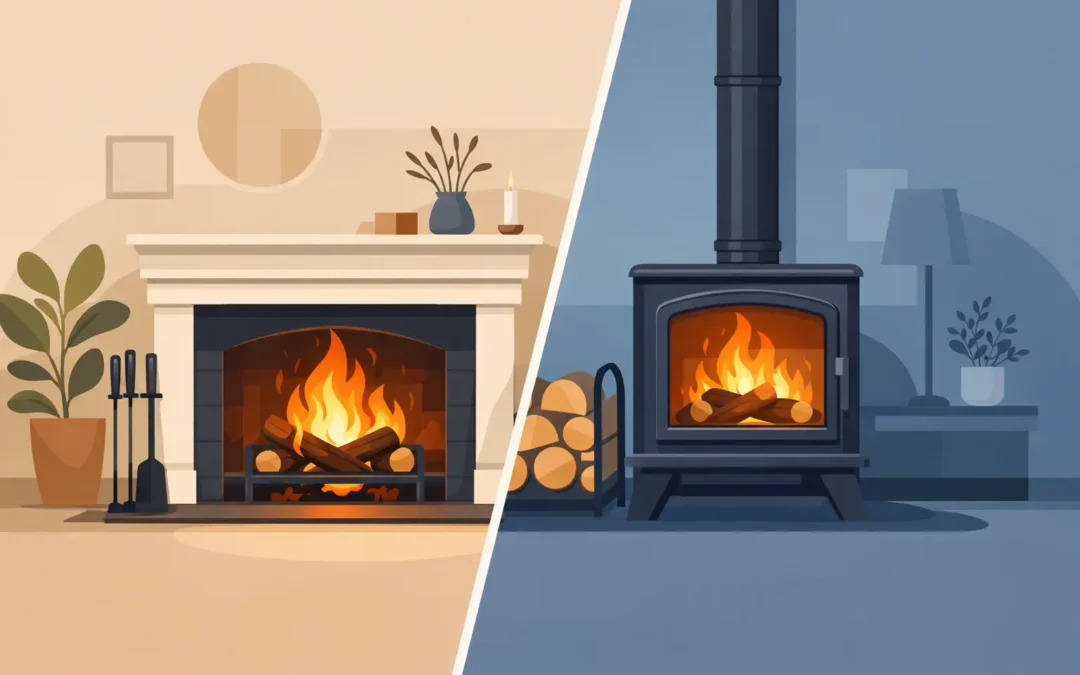
A lot of homeowners start with the same picture in mind – flames in the hearth, a warm room, and that familiar crackle on a cold evening. But when it comes to open fire vs wood burner, the right choice depends on more than looks. Heat output, chimney condition, running costs, maintenance and how you actually use the room all make a real difference.
If you are weighing up both options for a property in Leicestershire, it helps to be practical from the start. An open fire and a wood burner can both work well, but they suit different homes and different expectations. One gives you atmosphere first and heat second. The other is usually about control, efficiency and getting more usable warmth from the fuel you buy.
Open fire vs wood burner: the main difference
The simplest way to look at it is this. An open fire burns fuel in an uncovered fireplace opening, while a wood burner burns it inside a sealed stove body with controlled airflow. That one difference changes almost everything.
An open fire sends a large amount of heat straight up the chimney. You will feel warmth near the fire, but much of the energy is lost through the flue. A wood burner is built to burn more efficiently and to release more of that heat into the room. In most homes, that means a stove gives stronger and steadier warmth from less fuel.
That does not automatically make an open fire the wrong choice. Some people want the visual appeal, the sound, and the traditional character of an open grate in an older property. If the fire is used now and then, rather than every day through winter, the trade-off may be worth it.
Heat output and efficiency
If your main goal is to warm the room properly, a wood burner usually comes out ahead by a long way. Because the appliance is enclosed and the airflow is controlled, the fuel burns hotter and more cleanly. You are not constantly pulling warm air from the room up the chimney in the same way an open fire does.
That matters in everyday use. With an open fire, you can often feel cosy sitting close to it while the rest of the room stays cooler than expected. In some houses, especially older ones with draughts, the fire can even contribute to heat loss once it goes out because the chimney continues drawing air.
A wood burner tends to provide a more even heat and keeps working as a practical source of warmth rather than simply a focal point. If you are heating one main living space regularly, that can make a noticeable difference to comfort and fuel bills.
Running costs and fuel use
Fuel use is where many homeowners change their mind. Open fires get through logs quickly. Because they are less efficient, you need to burn more wood to get the same level of useful heat.
A good wood burner makes better use of seasoned logs, so the fuel tends to last longer. Over a full heating season, that can make the stove far more economical to run. If you plan to light it most evenings, or use it as a serious part of your home heating, efficiency is not a small detail – it becomes a running cost issue.
That said, the upfront cost is different. If you already have a usable open fireplace, you may be able to use it without the installation costs of fitting a stove, lining the chimney or making alterations to the fireplace opening. A wood burner often costs more at the beginning, even if it saves money later.
Maintenance and chimney care
Both options need proper maintenance. That is non-negotiable.
An open fire produces soot, ash and deposits in the flue, and because so much heat goes straight up the chimney, the conditions inside the flue can vary a lot. If poor fuel is used, or the chimney is not swept often enough, the risk of build-up increases.
Wood burners also need regular sweeping, and the idea that a stove is almost maintenance-free is a common mistake. Burners can produce creosote, especially if unseasoned or damp wood is used, and stove parts such as rope seals, fire bricks, baffle plates and glass all need checking over time.
The difference is often in how the system is managed. A properly installed stove with the right liner and the correct fuel can be very clean and reliable, but it still needs servicing and sweeping at suitable intervals. An open fire may be simpler in one sense, but chimney defects, smoke draw problems and general inefficiency are often more noticeable.
If the chimney has not been inspected in years, or you are unsure what condition it is in, that should be checked before choosing either route. In many cases, the chimney itself decides what is practical.
Safety considerations
Safety is one of the clearest points in the open fire vs wood burner comparison.
With an open fire, sparks and embers can escape into the room, which is why a proper fire guard matters. There is also greater exposure to smoke if the chimney draw is poor, if the weather affects the flue, or if there is a blockage such as old nesting material. Open fires also allow easier access for children and pets, which many families understandably see as a downside.
A wood burner is enclosed, so there is better containment of the fire itself. The stove body becomes very hot, of course, but the flames and fuel are behind a closed door. That generally makes it safer in normal use, provided the appliance has been installed correctly and the flue system is suitable.
Neither option should ever be treated casually. Carbon monoxide alarms, regular sweeping and proper installation standards matter whichever appliance you choose.
Style, character and the feel of the room
This is where the open fire still has a loyal following. There is no getting around the appeal of a real open flame in a traditional fireplace. In period homes, cottages and older properties with original chimney breasts, an open fire can look exactly right.
A wood burner creates a different look. It is neater, more controlled and often better suited to modern family living. Some homeowners prefer the stove as a feature in its own right, while others feel it changes the character of the fireplace too much.
There is no correct answer here. If the room is mainly for entertaining or occasional use, atmosphere may matter more than efficiency. If it is the room where the family spends every winter evening, practicality usually carries more weight.
Installation and what your chimney can cope with
Not every fireplace is ready for a stove, and not every old chimney is ideal for an open fire without remedial work. That is why blanket advice rarely helps.
A wood burner often needs a suitable flue liner, correct hearth dimensions, proper ventilation and enough clearance around the appliance. The size of stove also matters. Too large for the room and it can be uncomfortable to run. Too small and it will not deliver what you need.
An open fire may seem simpler because the fireplace already exists, but older chimneys can have hidden issues. Cracked flue surfaces, poor draw, tar deposits, loose masonry and blockages are common enough in older properties. Before making plans based on appearance alone, it is worth knowing what state the chimney is actually in.
That is one reason many homeowners prefer dealing with one local firm that can inspect, sweep, advise and install where needed. A practical assessment usually saves money and hassle later.
Which option suits your home best?
If you want dependable room heat, lower fuel waste and more control over the burn, a wood burner is usually the stronger choice. It suits households that plan to use solid fuel regularly and want something efficient, tidy and easier to manage day to day.
If you want period character, the look and sound of an open flame, and you are happy to accept lower efficiency and higher fuel use, an open fire may still be the better fit. It tends to suit occasional use and homes where visual appeal comes first.
There is also the question of your existing setup. If your chimney needs work either way, that can change the value of each option. Spending money to keep an inefficient open fire may not appeal once the full picture is clear. On the other hand, in some homes an open fire is part of the property’s character and worth preserving.
For many households, the decision comes down to one honest question: do you want a feature, or do you want a heat source that earns its keep?
If you are not sure, start with the chimney rather than the appliance. A proper inspection and straight advice from a qualified local professional will tell you what is safe, what is practical and what is likely to work well in your particular home. At Thurnby Chimney Sweeps, that is usually where the best decisions begin.