
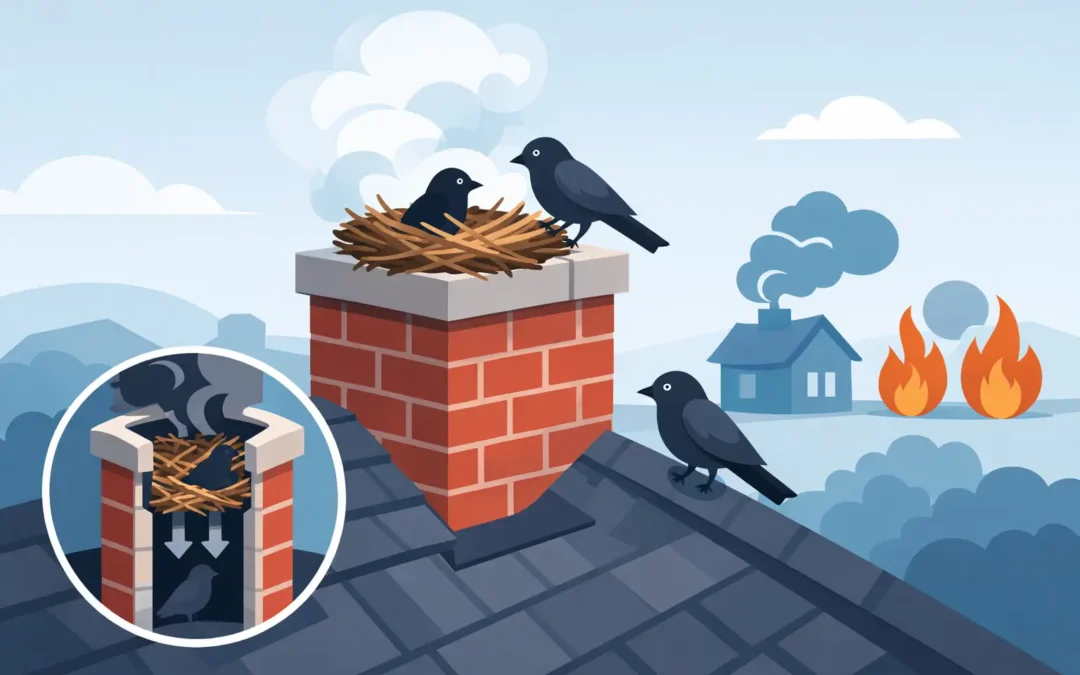
You usually notice the problem at the worst moment – when you light the fire and smoke starts pushing back into the room, or when you hear scratching and fluttering from the chimney breast. If you have a chimney blocked by birds, it is not a job to ignore and it is not one to tackle blindly either. A blocked flue can quickly turn from a nuisance into a safety issue.
Bird activity in chimneys is very common across Leicestershire, especially in spring and early summer when jackdaws and other birds look for sheltered nesting spots. From the bird’s point of view, an unused chimney pot is ideal. From the homeowner’s point of view, it can mean smoke problems, poor stove performance, unpleasant smells and a serious risk of fumes entering the property.
Why a chimney blocked by birds is a serious problem
A chimney works by allowing smoke, gases and combustion by-products to pass safely out of the home. When birds build a nest inside the flue, that route is partially or fully blocked. Even a small nest can disrupt the draw. A larger one can stop the flue working altogether.
That matters whether you use an open fire, a wood-burning stove or a multi-fuel appliance. If the flue cannot vent properly, smoke and carbon monoxide may spill back indoors. In some cases, homeowners notice black staining around the fireplace opening, a smoky smell in the room or fires that are difficult to light and keep going. In others, the first sign is a carbon monoxide alarm sounding.
There is also the condition of the chimney itself to think about. Nesting material is dry, compact and highly combustible. Twigs, feathers and debris inside a flue are not something you want sitting above a live fire. What starts as a bird problem can become a fire hazard.
Common signs birds are blocking the chimney
Some blockages are obvious. Others are not, especially if the chimney has not been used for a while. The most common clue is noise. If you hear chirping, fluttering or scratching from the chimney, there is a fair chance birds have entered the flue or built nearby.
Another sign is bits of nesting material falling into the fireplace or stove. Twigs, moss, feathers and droppings around the hearth usually point to activity higher up. If you light a fire and smoke comes back into the room instead of rising cleanly, that is another strong warning sign.
You may also notice a stale or unpleasant smell from the fireplace, especially if debris has become damp or if there is a dead bird trapped in the flue. In some homes, the blockage is only discovered during a routine chimney sweep or CCTV inspection.
What not to do if birds are in the chimney
The first thing is simple – do not light a fire to try to burn the nest away. That can ignite nesting material inside the flue and create a chimney fire. It can also injure or kill live birds trapped inside, which raises both welfare and legal issues.
It is also unwise to start poking up the chimney with rods unless you know exactly what you are dealing with. A nest can be tightly wedged and forcing it down may make the blockage worse. In the case of lined flues or stove systems, improper clearing can also damage internal components.
Another common mistake is assuming the problem has gone because the noise stops. Birds may have left behind a full nest, loose debris or a partial blockage. The chimney still needs to be checked and, if necessary, swept and inspected properly before it is used again.
Can you remove a bird nest from a chimney yourself?
Sometimes homeowners ask whether they can just remove the nest from the fireplace opening. The honest answer is that it depends on where the nest is, whether birds are still active, and what type of chimney or appliance you have.
In the UK, wild birds, their nests and eggs can be legally protected while in use. That means timing matters. If a nest is active, removal is not always straightforward or lawful. A professional will assess whether the nest is disused, whether birds are still present and the safest way to proceed.
There is also the practical side. Nests are not always sitting neatly at the bottom of the flue. They can be lodged above bends, above closure plates or in awkward sections of the chimney. On stove systems, access can be more restricted than people expect. In many cases, specialist rods, sweeping equipment and CCTV inspection are the safest way to clear the obstruction without causing damage.
How professionals deal with a chimney blocked by birds
The right approach starts with identifying exactly what is inside the flue and where it is sitting. That may be done by visual checks, sweeping access or CCTV inspection. Once the blockage is confirmed, the nest or debris can be removed using suitable equipment and controlled methods.
If there are live birds involved, the work needs to be handled carefully. If the nest is disused, removal is usually more straightforward. Either way, the goal is not just to clear the blockage but to make sure the flue is safe to use afterwards.
That often means carrying out a full chimney sweep once the nesting material has been removed. Fine debris, soot and loose material can remain in the flue even after the main blockage is cleared. If the chimney has been blocked for some time, it is also sensible to check for damage, poor ventilation, failed liners or other problems that may have been hidden by the original issue.
At Thurnby Chimney Sweeps, this is exactly the sort of practical problem we deal with for local homeowners – not just removing the blockage, but checking the system properly so you know where you stand.
Why birds choose some chimneys more than others
Not every chimney gets targeted in the same way. Unused chimneys are obvious candidates because they are quiet, sheltered and rarely disturbed. Chimneys without a suitable cowl or bird guard are also far easier for birds to access.
Jackdaws are particularly known for nesting in chimneys. They build aggressively and can carry in a surprising amount of material in a short time. A chimney that was clear a few weeks ago can become heavily obstructed before you realise anything is wrong.
Property type also plays a part. Older homes, open chimney pots and chimneys on quieter roads or near trees often see more bird activity. If you have had one nest before, the chances of repeat visits are higher unless the top of the chimney is properly protected.
Preventing future blockages
Once a chimney has been cleared, the next step is stopping the problem from coming back. In many cases, that means fitting the right chimney cowl or bird guard. The key word is right, because not every cowl suits every chimney or appliance.
A poorly chosen cowl can restrict airflow, worsen downdraft or fail to keep birds out. That is why it is worth matching the fitting to the type of flue, fuel and chimney pot. Open fires, wood burners and gas appliances can all have different requirements.
Regular sweeping also helps. A chimney that is checked routinely is far less likely to develop a hidden blockage. If birds are starting to investigate the flue, early signs can be picked up before the nest becomes a major obstruction. For homeowners who only use their fire seasonally, a pre-season check is often the sensible option.
When to call for help
If you suspect a bird nest in the chimney, the safest move is to stop using the fire or stove until the flue has been assessed. That is especially important if smoke is backing up, if your carbon monoxide alarm has activated, or if debris is falling into the appliance.
You should also arrange a check if the chimney has been unused for a long spell and you are planning to put it back into service. A lot can happen inside a flue between one heating season and the next. A quick look from ground level is not enough to confirm that it is clear.
For many homeowners, peace of mind is the real reason to bring in a qualified professional. You want to know the blockage has been removed properly, the flue is safe, and steps have been taken to reduce the chance of the same issue happening again.
If your chimney is blocked by birds, don’t wait for a smoky room or a dangerous buildup of fumes to force the issue. Getting it checked early is usually simpler, safer and cheaper than dealing with the consequences later.