
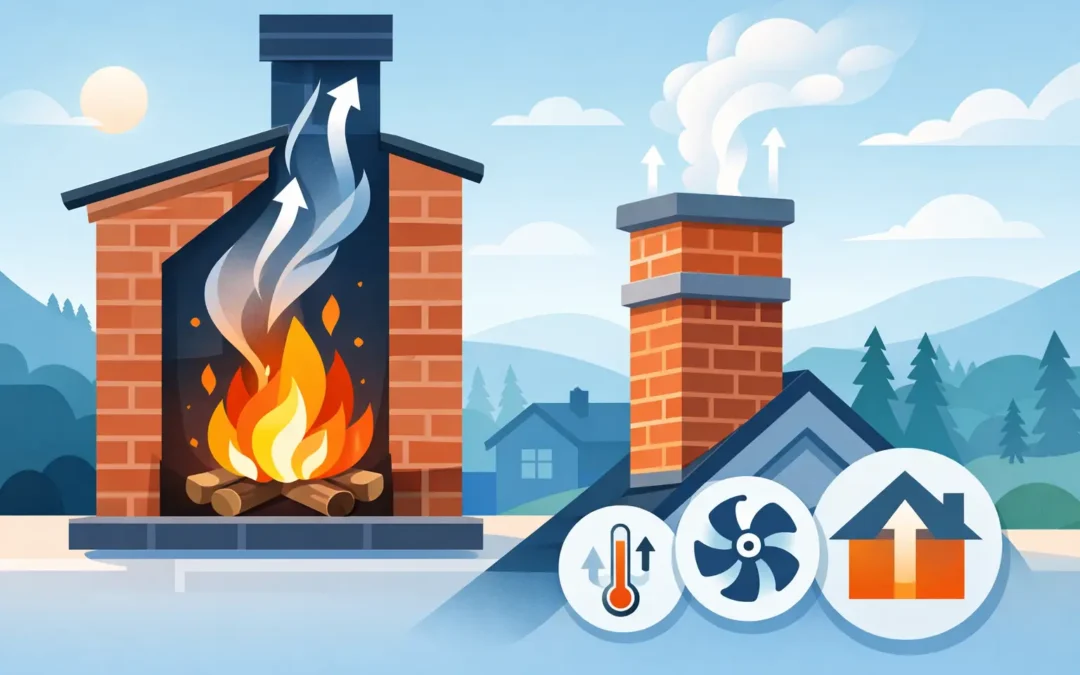
Smoke spilling into the room when you open the stove door is usually the first sign something is not right. If you are looking for the best ways to improve chimney draw, the answer is not always a bigger fire or a quick fix from the hardware shop. Poor draw is usually caused by a specific fault in the chimney, flue, stove setup or the way air moves through the house.
A chimney works by creating an upward pull. Hot gases rise, the flue carries them away, and fresh air feeds the fire. When that balance is off, you get sluggish fires, smoky starts, fumes in the room and soot building up where it should not. Some issues are simple. Others need proper testing and trade experience to put right safely.
What causes poor chimney draw?
Before looking at the best ways to improve chimney draw, it helps to know what is going wrong. In most homes, poor draw comes down to one or more of four things – blockage, cold flue temperatures, lack of ventilation or pressure problems around the chimney pot.
A partially blocked chimney is one of the most common causes. Soot, tar, fallen masonry and bird nests can all reduce the flue opening and slow the movement of gases. Even if the chimney is not fully blocked, restricted flow can be enough to cause smoke to spill back indoors.
Cold chimneys are another regular issue, especially with wood burners that are only used now and again. If the flue is cold, smoke struggles to rise at start-up. That often means the fire smoulders, the glass blacks up quickly and the room fills with smoke when the appliance door is opened.
Modern homes can also work against a stove. If the property is tightly sealed with draught-proofing, new doors and windows, or extractor fans running nearby, the stove may not get the air it needs. The chimney cannot pull properly if the room is short of replacement air.
Then there is downdraught. This happens when wind hits the roofline, nearby buildings or trees in a way that forces air back down the pot. It can be an occasional nuisance or a constant problem, depending on the house and weather conditions.
Best ways to improve chimney draw at home
The right fix depends on the cause. That said, there are several proven ways to improve draw that make a real difference when they are matched to the problem.
Start with a proper chimney sweep
If the chimney has not been swept recently, this should always come first. A sweep removes soot, tar deposits and debris that may be narrowing the flue. It also gives you a clearer picture of what else might be wrong.
Many draw problems turn out to be at least partly caused by build-up inside the chimney. Wood that is not fully seasoned, low burn temperatures and irregular use can all lead to heavier deposits. If there is a bird nest or fallen material inside the flue, no cowl or vent tweak will solve the issue until the blockage is removed.
Warm the flue before lighting
A cold flue can make even a sound chimney perform badly. One of the simplest ways to help is to warm the chimney before building the main fire. That can help start the upward pull and reduce smoke roll-back.
The key is not to overload the stove straight away. Use dry kindling, a suitable firelighter and a steady, hot start rather than trying to get going with large logs on a weak flame. Wet fuel makes everything worse. It lowers flue temperature, creates more smoke and increases soot deposits.
Check the fuel you are burning
Fuel quality has a direct effect on chimney performance. Logs should be properly seasoned or kiln-dried, with a low moisture content. Damp wood gives off more water vapour and smoke, which cools the flue gases and weakens draw.
Smokeless fuels and wood need the right appliance settings too. If the air controls are shut down too far, the fire burns cooler and lazier than it should. People often do this to make fuel last longer, but it can create tar, poor combustion and draw issues over time.
Make sure the room has enough ventilation
A stove needs air from somewhere. In older houses, that air often came in naturally through gaps around floors, windows and doors. In newer or upgraded homes, those gaps may be gone.
If opening a window slightly improves the fire straight away, poor ventilation may be part of the problem. The long-term answer might be a dedicated air vent, especially where appliance output or building layout requires one. This is one of those areas where guesswork is not ideal. Too little ventilation affects performance and safety, but the vent also needs to be positioned properly and sized correctly.
Look at the chimney height and pot position
Sometimes the chimney simply is not high enough to create a reliable pull, or the pot sits in a poor wind zone. Roof shape, nearby extensions, neighbouring buildings and tall trees can all interfere with the airflow around the terminal.
Raising the height can improve draw, but not in every case. If the issue is mainly wind-related, adding height alone may not cure it and can occasionally make the chimney more exposed. This is where an experienced inspection matters. What works on one property can fail on another a few streets away.
Fit the right anti-downdraught cowl
A suitable cowl can be very effective where wind is pushing air back down the chimney or where the flue needs protection from rain and nesting birds. The important word here is suitable.
There is no single cowl that fixes every draw problem. Some are designed mainly for bird guard purposes. Others help with downdraught. Some are not appropriate for certain fuels or appliance types. Fitting the wrong one can restrict the flue or create maintenance problems later. A proper assessment of the fuel, appliance and chimney setup comes first.
Inspect the flue for damage or sizing problems
Not every chimney is built or lined correctly for the appliance it serves. If the flue is oversized, damaged, leaking or in poor internal condition, the chimney may never draw as it should.
This is especially common in older properties where an open fire chimney has later been used for a stove without the right liner or connection. A flue that is too large allows gases to cool too quickly. A damaged flue can leak smoke and reduce the pressure difference needed for good draw. CCTV inspection is often the quickest way to see what is happening inside and avoid guessing.
Check for mechanical extraction nearby
Kitchen extractors, bathroom fans and utility room extraction can all compete with the chimney. If a fan is pulling air out of the house faster than replacement air is coming in, the stove may struggle or smoke back into the room.
This can be a very specific problem. The chimney may work well most of the time and fail only when an extractor is running. If the issue seems inconsistent, look at what else is happening in the house when the stove misbehaves.
When a bigger problem is hiding behind poor draw
Poor draw is not always a minor nuisance. It can be a warning sign that the chimney system needs attention. Repeated smoke spillage, heavy tar formation, strong odours, carbon monoxide alarm activation or staining around the fireplace should never be ignored.
In some cases, the fault lies above roof level. In others, the issue is lower down – poor stove installation, failing seals, incorrect flue connections or a liner that has not been fitted to the right standard. This is why temporary workarounds often disappoint. You might ease the symptom without solving the cause.
A family-run firm like Thurnby Chimney Sweeps will usually start with the basics – sweeping, checking the appliance, assessing ventilation and looking at terminal performance – before recommending anything more involved. That approach tends to save homeowners time, money and a fair bit of frustration.
When to call in a professional for chimney draw problems
If you have already tried dry fuel, a proper lighting method and basic ventilation checks, but the problem continues, it is time for a professional inspection. The same applies if the chimney has not been swept recently, if you suspect a nest or blockage, or if the stove was fitted into an older chimney without a clear record of the flue condition.
Draw problems are one of those faults where small details matter. The shape of the pot, the route of the flue, the condition of the liner, the effect of nearby roofs and even the way the room is ventilated can all play a part. Get the diagnosis right, and the fix is often straightforward. Get it wrong, and you can spend money on parts you never needed.
A chimney should carry smoke away cleanly and reliably, without fuss. If yours is struggling, the best next step is not to put up with it – it is to find the real cause and put it right properly.