
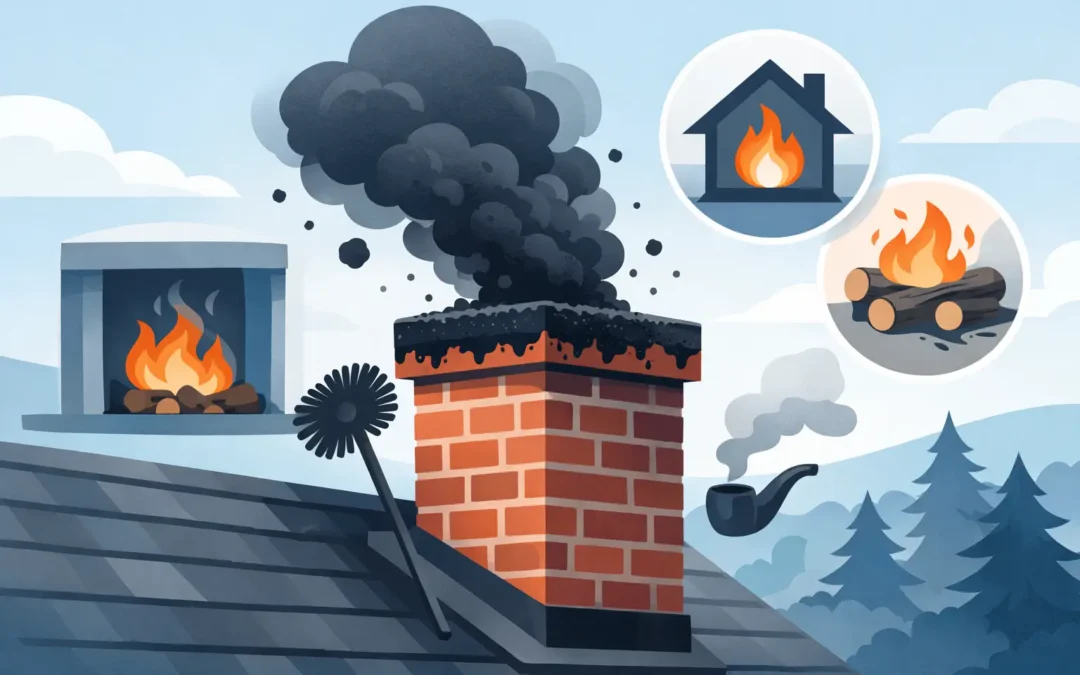
You usually notice soot after the warning signs have already started. The fire is harder to light, the stove glass blacks over quickly, or there is a stronger smoky smell around the fireplace. If you are wondering what causes chimney soot buildup, the short answer is incomplete combustion – but in practice, several day-to-day issues can make it worse.
Soot is a black, powdery deposit made from unburnt carbon particles. Every solid fuel appliance produces some amount of it, but heavy buildup is a sign that something is not burning as cleanly as it should or that the flue is not drawing properly. Left alone, soot narrows the flue, affects performance, and increases fire risk.
What causes chimney soot buildup in the first place?
Soot forms when fuel does not burn fully. In a healthy setup, the fire gets enough oxygen, the fuel burns hot enough, and the combustion gases rise up the flue before cooling too much. When one of those parts is off, more particles are left behind and stick to the chimney walls.
That means soot is often less about one single fault and more about a combination of factors. Fuel quality, burning habits, appliance condition, chimney design and weather can all play a part. Two homes can use similar stoves and still see very different levels of soot because the way the system is used matters so much.
Wet or unseasoned wood
One of the most common causes is burning wood with too much moisture in it. Freshly cut logs or poorly stored firewood contain a lot of water. Before the wood can burn properly, the fire has to drive off that moisture first, which lowers the temperature in the firebox.
A cooler fire produces more smoke and more unburnt particles. Those particles then travel into the flue and settle as soot. In many cases, damp wood also contributes to tar and creosote deposits, which are even more serious than loose soot because they are more flammable and harder to remove.
For most wood-burning stoves, properly seasoned or kiln-dried logs are the better choice. The drier the fuel, within sensible limits, the cleaner and hotter it tends to burn.
Slumbering the stove for long periods
Many homeowners try to make fuel last overnight by shutting the air vents right down. It is understandable, especially in colder months, but this is one of the quickest ways to encourage soot buildup.
When a stove is starved of air, the fire smoulders rather than burns cleanly. Flue gases become cooler and dirtier, and the chimney starts collecting soot much faster. You may save a bit of fuel in the short term, but it often creates more mess in the flue and more maintenance in the long run.
There is always a balance to strike. A stove should be controlled, not overfired, but regularly running it too low is not good practice either.
Poor airflow and lack of oxygen
All fires need oxygen to burn efficiently. If the appliance is not getting enough air, soot is far more likely to form. Sometimes that comes down to user habits, such as closing the air controls too far. Other times it is linked to the room itself.
Modern homes are often more airtight than older properties. Double glazing, insulation upgrades and draught-proofing are all useful, but they can reduce the natural airflow a stove or fire relies on. If the appliance struggles for combustion air, the burn quality drops.
This is one reason proper installation matters. Ventilation requirements are not guesswork. A stove that is the wrong size for the room or fitted without suitable air supply can create ongoing soot and smoke problems.
A cold chimney or flue
Chimneys work best when the flue warms up and creates a steady draw. If the flue stays cold, smoke and combustion gases slow down, cool too quickly and leave more deposits behind.
This often shows up in chimneys on outside walls, older brick flues, or systems that are not used very often. Lighting a small fire from cold and then expecting the chimney to pull strongly straight away can be optimistic. A poor draw at start-up can allow soot to settle before the flue has had chance to get properly warm.
Lined flues and correctly designed systems usually perform better because they keep gases hotter and moving in the right direction. An oversized or deteriorating flue can do the opposite.
Burning the wrong fuel
Not every fuel is suitable for every appliance. Burning household waste, treated timber, painted wood, glossy paper or other unsuitable materials can create heavy soot very quickly. These materials often burn dirty and can release harmful residues into the flue.
Even with approved fuels, the appliance must be designed for that type of burning. A wood-only stove used like a multi-fuel appliance, or vice versa, may not perform as intended. Different fuels burn at different temperatures and produce different by-products.
If you are ever unsure, follow the appliance manufacturer guidance and use the fuel the stove was built for. Guesswork with fuel rarely ends well.
Infrequent sweeping and existing deposits
Sometimes soot buildup keeps getting worse because there is already a layer inside the flue catching new material. Once deposits start building, the chimney becomes less efficient. The flue passage narrows, airflow suffers, and even more soot begins to stick.
This is why regular sweeping matters even if the fire still seems to be working. A chimney does not need to be fully blocked before it becomes a problem. Reduced draw, smoky odours and dirtier stove glass can all be signs that deposits are affecting performance.
At Thurnby Chimney Sweeps, we often find that customers thought their appliance was the issue, when the real problem was a flue that simply needed proper cleaning and checking.
Chimney design problems and downdraught
If you are asking what causes chimney soot buildup despite using decent fuel, the chimney setup itself may be part of the answer. A flue that is too large, too short, poorly lined or damaged can struggle to maintain a good draw.
Downdraught can also make a difference. Wind conditions, nearby roofs, trees or chimney pots can push air back down the flue instead of letting smoke rise freely. When that happens, combustion becomes less stable and soot deposits can increase.
These cases are not always obvious from the fireplace opening. Sometimes a CCTV inspection is the best way to see whether there is damage, a restriction, a change in flue direction, or another fault affecting performance.
Appliance condition and servicing
A stove or fire that is not in good working order may also create excess soot. Worn rope seals, faulty baffles, damaged firebricks or general servicing issues can affect how the appliance burns. If combustion is disrupted inside the stove, the flue will usually show the results.
This is especially relevant if the appliance used to burn well and has gradually become dirtier over time. Homeowners often assume the fuel has changed, but sometimes the stove itself needs attention.
Sweeping removes deposits, but if there is an underlying appliance fault, soot may return sooner than expected. That is why it helps to look at the full system rather than treating the chimney in isolation.
How to reduce chimney soot buildup
The good news is that most soot problems can be improved with a few practical changes. Burn dry, suitable fuel. Avoid letting the stove smoulder for hours on end. Make sure the appliance has the airflow it needs and keep up with sweeping at sensible intervals for the type of fuel you use.
If problems persist, it is worth having the chimney and appliance checked properly. A blocked flue, bird nest, liner fault, poor draw or stove issue will not fix itself, and continuing to use the fire can make things worse.
A clean chimney is not just about tidiness. It helps the appliance run more efficiently, reduces the chance of smoke spilling back into the room, and lowers the risk of chimney fire. That is why regular maintenance is not an extra – it is part of safe use.
If your stove is burning sluggishly, your glass is blackening quickly or the room smells smoky after use, those are signs worth acting on. Soot has a way of building up gradually, then becoming a bigger problem all at once.