
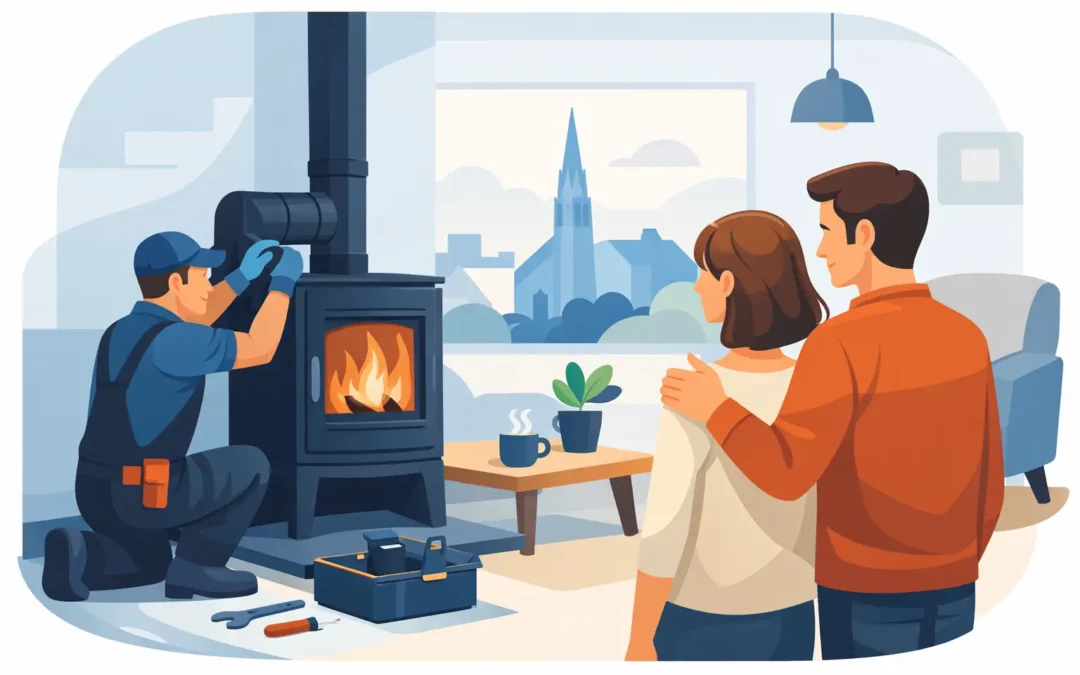
A stove that looks right in the showroom can be completely wrong for your room. That is usually the point where people realise stove installation Leicester homes need is not just about fitting an appliance and lighting a fire. It is about heat output, chimney condition, air supply, hearth rules, flue performance and, above all, safety.
In Leicester and the wider county, many properties have older chimneys, blocked flues, draught issues or fireplaces that have been altered over the years. Some are ready for a new stove with minimal work. Others need lining, repairs or a twin wall flue system to make the installation safe and compliant. That is why the best starting point is not choosing the prettiest stove. It is understanding what your home can properly support.
What good stove installation in Leicester really involves
A proper installation starts with the property, not the brochure. The installer needs to assess the fireplace opening, chimney route, flue size, condition of the stack and whether the room has the ventilation needed for the appliance being considered. If the chimney has not been used for years, it may also need sweeping and inspection before any decisions are made.
This matters because stoves do not all behave the same way once they are connected. A wood-burning stove in a small, modern room can easily be oversized. An older chimney may draw poorly, leading to smoke spillage or difficulty getting the fire going. In some homes, a liner is the sensible option. In others, the problem is not the appliance at all but the terminal, the cowl or downdraft affecting the top of the stack.
A reliable installer will talk you through those points in plain English. If extra work is needed, you should know why and what it solves.
Choosing the right stove for your room
One of the most common mistakes is going too big. Many homeowners understandably think a larger stove means better value or more comfort, but too much output can leave a room unbearably hot and encourage the stove to be run poorly. That can shorten its life and create soot and tar in the flue.
A stove should suit the space it is heating and the way you use the room. A compact stove may be ideal for a snug or standard lounge. Larger open-plan areas may need something with more output, but that depends on insulation levels, ceiling height and how much supplementary heating the house already has.
Style matters too, but function comes first. Some households want a simple wood-burner for the main living space. Others prefer a multi-fuel appliance for flexibility. There is no single right answer. It depends on your fuel preference, the property layout and how often the stove will be used.
Chimney condition can make or break the job
A chimney may look fine from the fireplace opening and still have issues further up. Cracked liners, heavy soot deposits, old bird nests, leakage points and damaged flaunching can all affect performance. That is why inspection is not a box-ticking exercise. It helps avoid costly surprises after the installation has already started.
In many Leicester properties, especially older homes, the chimney has seen years of mixed use or long periods of disuse. Some have had petrol fires, open fires or no appliance at all for a long time. Before fitting a stove, the flue needs to be suitable for solid fuel use. If it is not, lining may be recommended.
A liner is not always required, but when it is needed, it plays a big part in safe operation. It helps improve draw, reduces condensation issues and gives the appliance a flue route that matches the stove more closely. On homes without a usable chimney, a twin wall flue system may be the better route.
Stove installation Leicester and building regulations
This is the part homeowners often worry about, and rightly so. A stove installation must meet the relevant standards for hearth dimensions, distance to combustible materials, flue arrangement, ventilation and appliance connection. The details matter because they affect both safety and legal compliance.
Using a properly qualified installer takes a lot of that pressure off the householder. A HETAS registered installer can self-certify the work, which means you are not left trying to sort building control questions after the fact. That matters if you later sell the property, make an insurance claim or simply want confidence that the job has been done properly.
It is also worth remembering that compliance is not just paperwork. It is there to reduce the risk of chimney fires, carbon monoxide problems and heat damage to surrounding materials.
Why ventilation and flue performance matter
A stove needs the right balance of fuel, heat and air to burn cleanly. If the room is too airtight or the flue is performing poorly, you can run into trouble quickly. That might show up as smoke entering the room, blackened glass, difficulty lighting the fire or excessive soot build-up.
Modern homes and recently improved properties can sometimes be more prone to ventilation issues because draughts have been reduced elsewhere. That is good for energy efficiency, but it can change how a stove behaves. Older homes can have the opposite problem, with inconsistent draw caused by chimney height, exposure or stack condition.
This is where experience really counts. A good installer does not just fit the stove and leave. They look at how the whole system will perform and flag likely issues before they become expensive frustrations.
The value of using one provider for installation and chimney work
There is a practical benefit to using a company that handles both stove fitting and chimney services. If the flue needs sweeping, inspecting, lining, cowl fitting or fault-finding, it can all be dealt with as part of one joined-up job rather than split across several trades.
That tends to save time, but more importantly, it avoids the gaps where problems get missed. For example, a stove may be fitted perfectly, but if a hidden nest, partial blockage or downdraft issue remains higher up the chimney, performance will still suffer. A provider that understands the full system is in a better position to spot that.
For local homeowners, that joined-up approach is often the difference between a straightforward installation and weeks of avoidable back and forth.
What to expect from the installation process
Most installations begin with a survey. This is where measurements are taken, the existing fireplace or flue route is checked and the likely scope of work is explained. If chimney sweeping or CCTV inspection is needed first, that should be made clear early on.
Once the specification is agreed, the installation itself may include preparing the chamber, fitting or connecting the flue system, installing the stove, checking clearances, testing the draw and making sure the appliance is operating as it should. You should also be shown the basics of safe use, including fuel choice, airflow control and when sweeping or servicing will be due.
A tidy finish matters, but the unseen parts matter more. The quality of the flue components, the standard of the connection and the care taken with commissioning are what make the installation dependable in daily use.
Aftercare is part of the job
A stove is not a fit-and-forget appliance. It needs sweeping at suitable intervals, sensible burning practices and occasional servicing to keep it working safely and efficiently. If you burn poor fuel or run the stove slumbering for long periods, the flue will pay the price.
That is why aftercare should be part of the conversation from the start. Homeowners should know how often the chimney is likely to need sweeping, what signs suggest a developing issue and when to book a service. A company such as Thurnby Chimney Sweeps can be especially useful here because installation and ongoing maintenance sit under the same roof.
How to spot a trustworthy installer
You do not need sales talk. You need clear advice, fair pricing and proof of competence. Look for recognised registration, proper training, a willingness to inspect before quoting fully and straight answers about what is needed and what is optional.
Be cautious of anyone who offers a bargain price without asking about the chimney condition, the room size or compliance requirements. Stove work is safety-critical. A cheap installation can become very expensive if it has to be corrected later.
The best installers tend to be the ones who are calm, methodical and honest about trade-offs. They will tell you if a certain stove is too large, if a liner is advisable rather than strictly mandatory, or if another flue route would serve you better in the long run.
A new stove should give you warmth, reliability and peace of mind, not guesswork. If you are considering stove installation in Leicester, choose someone who treats the chimney, flue and appliance as one complete system – because that is what keeps your home safe and your stove working as it should.