
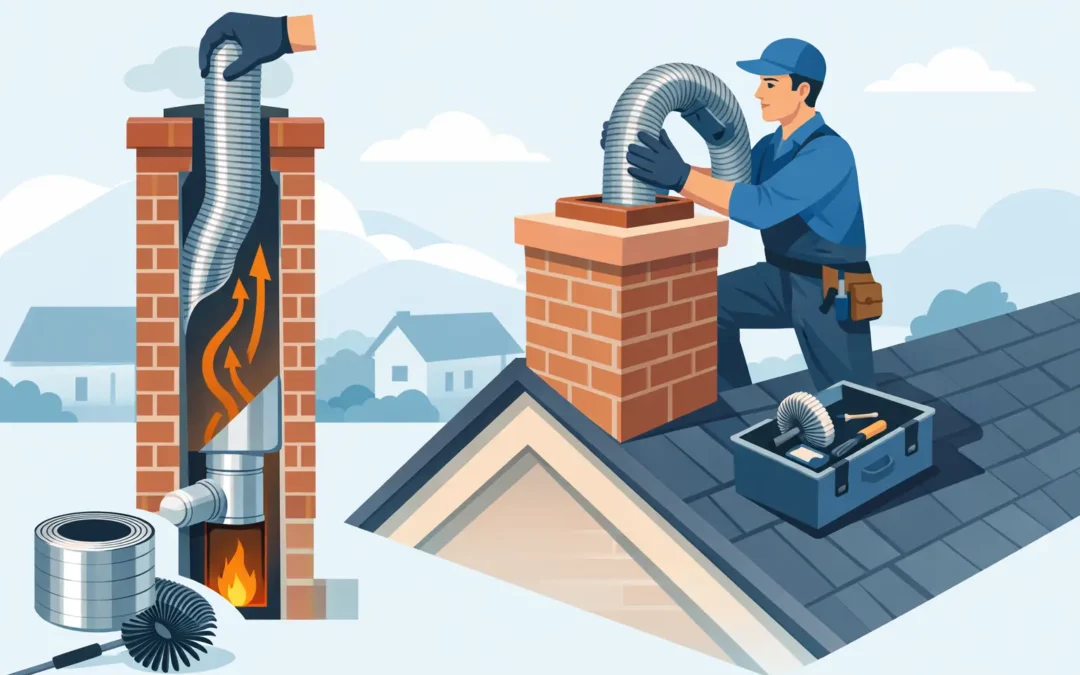
A stove that smokes into the room, a chimney that draws poorly, or an old flue with unknown condition usually points to the same question – is the chimney fit for use? Chimney lining installation is often the answer, but it is not a job to guess at. The liner has to suit the appliance, the fuel type and the condition of the chimney itself.
For many homeowners, the problem starts after fitting a new stove into an older property. The chimney may have worked well enough with an open fire years ago, but that does not automatically mean it is suitable for a modern wood-burning or multi-fuel appliance. Stoves produce different flue gas temperatures and need the right size and type of flue to operate safely.
What chimney lining installation actually does
A chimney liner creates a protected passage for smoke, gases and combustion by-products to leave the appliance and escape safely above roof level. It helps the flue draw properly, reduces the chance of fumes leaking through damaged brickwork and gives the chimney a surface that is far better suited to modern heating appliances.
Without a sound liner, several issues can appear. Smoke can spill back into the room. Tar and soot can build up more heavily. Moisture can soak into the chimney structure. In the worst cases, dangerous gases can escape through gaps or defects that are hidden from view.
That is why lining is not simply an upgrade for efficiency. In many homes, it is a safety measure first.
When chimney lining installation is usually needed
Not every chimney needs a new liner, and any honest tradesperson should say so. Sometimes a flue is already lined and in good condition. Sometimes the issue is poor sweeping history, a blockage, downdraft or a terminal problem rather than the liner itself.
That said, chimney lining installation is commonly recommended when a chimney has been damaged by age, when an existing liner has failed, or when a new stove is being connected to a flue that is too large or unsuitable. Older properties around Leicestershire often have masonry chimneys that look sound from the outside but show heavy wear internally once inspected.
A CCTV chimney inspection is often the clearest way to assess this. It shows whether the flue is cracked, oversized, tar-coated, obstructed or otherwise unfit for the appliance you want to use. This matters because fitting a stove onto a flue that is the wrong size or in poor condition can lead to poor performance from day one.
Signs your chimney may need a liner
A few warning signs come up time and again. Smoke entering the room is an obvious one. Another is a stove that is hard to light or difficult to keep burning cleanly. Staining on chimney breasts, strong smoky smells, excessive soot deposits and signs of damp around the stack can also point to flue problems.
Sometimes there are no obvious symptoms at all. A liner issue may only come to light during a stove installation, a routine sweep or a camera inspection. That is one reason regular maintenance matters. Problems are easier and cheaper to deal with before they become major repairs.
Choosing the right liner for the job
There is no single liner that suits every chimney. The correct choice depends on the appliance, the fuel used, the route of the flue and the overall condition of the chimney. This is where proper training and experience matter.
For many domestic stove installations, a flexible stainless steel liner is used within an existing masonry chimney. These are common because they can be lowered down the chimney and connected to the appliance with the right components. Even then, there are grades and specifications to consider. Wood-only use and mixed fuel use are not always treated the same.
In other situations, a rigid system may be more suitable, especially where the chimney is being built new or where the flue route requires a different approach. There are also cases where a twin wall insulated flue system is the better answer because there is no usable chimney to line in the first place.
The liner diameter matters just as much as the material. Too large and the flue may stay too cool, causing sluggish draw and condensates. Too small and it may not meet the appliance requirements or allow safe performance. Good installation is about matching the full system correctly, not just dropping in a liner and hoping for the best.
How the installation process usually works
A proper chimney lining installation starts with assessment, not fitting. The chimney should be inspected, swept and checked for suitability before any liner is installed. If there is old debris, bird nesting material, loose masonry or heavy soot deposits, these need dealing with first.
Once the flue has been assessed, the installer will confirm the right liner type and size for the appliance. Access arrangements, chimney height, bends, stack condition and terminal requirements all affect the work. In some homes, scaffolding or roof access equipment may be needed to carry out the job safely.
The liner is usually fed through the chimney from the top and connected at the bottom to the stove or flue pipe system using the correct adaptors and closure components. Insulation or backfilling may be appropriate in some cases, though not in every one. The top of the system is then finished with the right plate, clamp and cowl or terminal to secure the liner and protect the flue.
After fitting, the system should be tested and commissioned properly. That includes checking the draw, confirming safe operation and making sure the installation complies with the relevant standards and the appliance manufacturer’s requirements.
Why poor installation causes expensive problems
A badly fitted liner can be almost as problematic as no liner at all. If the wrong grade is used, it may fail early. If the liner is the wrong size, stove performance can suffer. If connections are not sealed and supported correctly, leaks and long-term wear can follow.
There is also the issue of shortcuts. Reusing unsuitable parts, skipping inspection, or fitting a liner without addressing blockages or chimney damage simply stores up trouble for later. Homeowners usually only discover this once they start experiencing smoke issues, staining, poor burning or repeated call-outs.
This is why it pays to use a qualified, properly insured professional who understands the full chimney and flue system rather than treating the liner as a stand-alone item.
Chimney lining installation and ongoing maintenance
A new liner is not a fit-and-forget part of the house. It still needs sweeping at suitable intervals, and those intervals depend on the appliance, the fuel and how often it is used. Burning wet wood, slumbering the stove or using poor fuel can shorten the life of the liner and increase soot and tar deposits.
Regular sweeping helps protect the liner and keeps the appliance working as it should. It also gives an opportunity to spot early signs of wear, bird entry, terminal damage or changes in performance. If a problem starts to develop, it is far better to catch it during maintenance than after a dangerous incident or expensive failure.
For homeowners, this is where using one local company for sweeping, inspection and installation can make life easier. The history of the chimney is known, records are clearer and advice is more consistent. Thurnby Chimney Sweeps works with many customers on exactly that basis – keeping the system safe year after year, not just turning up for the one-off job.
Cost, value and what homeowners should ask
The cost of chimney lining installation varies because chimneys vary. Height, access, liner type, appliance requirements and the condition of the existing flue all influence the price. A straightforward installation in a sound chimney is very different from a job involving difficult access, heavy deposits, repairs or extra flue components.
The cheapest quote is rarely the best guide. What matters is whether the installer has allowed for the correct specification and safe completion of the work. It is sensible to ask what type of liner is being fitted, whether the chimney will be swept and inspected first, what finishing components are included and whether the work will be properly commissioned.
That kind of clarity helps avoid surprises and gives you confidence that the system is being installed for the long term, not just to get the stove lit on the day.
Getting it right from the start
Chimney lining installation is one of those jobs where the details matter more than the sales pitch. A correctly lined chimney supports safe use, cleaner burning and better stove performance. A poor decision at this stage can lead to years of nuisance, extra cost and real safety concerns.
If you are planning a new stove, dealing with smoke problems or unsure about the condition of an older flue, the sensible next step is not to assume – it is to have the chimney checked properly and get advice based on what is actually there.