
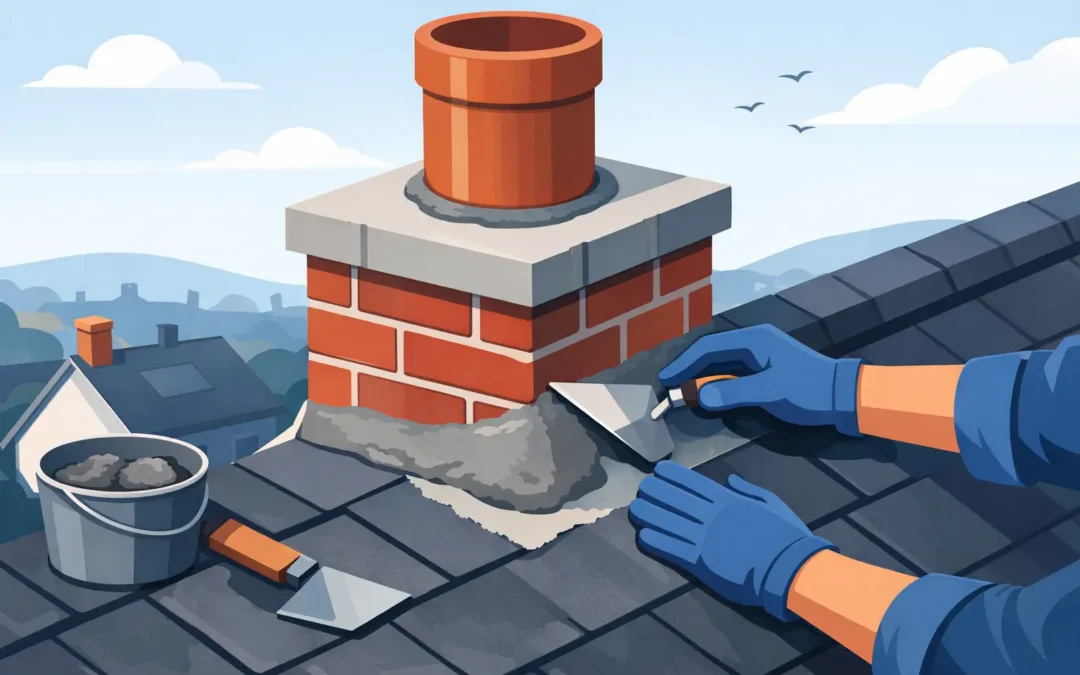
You usually do not notice chimney flaunching until something has already started to go wrong. A loose chimney pot, crumbling mortar on the top of the stack, damp marks, or bits of masonry in the guttering often point to the same area. If you have been asking what is chimney flaunching, the simple answer is that it is the sloped mortar around the base of the chimney pot that helps secure it and sheds water away from the top of the stack.
It is a small part of the chimney, but it does an important job. When flaunching is sound, it helps keep the pot stable and reduces the amount of rainwater getting into vulnerable brickwork and mortar joints. When it starts to fail, the damage can spread further down the stack and lead to bigger repair bills if left too long.
What is chimney flaunching?
Chimney flaunching is the weathered mortar finish at the top of a chimney stack, formed around the chimney pot or pots. It is normally laid at an angle so water runs away rather than sitting on the top surface. In practical terms, it acts as both a fixing point and a protective finish.
People sometimes confuse flaunching with the crown or the stack itself. They all work together, but they are not the same thing. The chimney pot is the clay or metal terminal you can see at the top, the stack is the brick or stone structure below, and the flaunching is the mortar bedding and shaping around the pot. If that top mortar starts cracking or breaking away, the pot can become less secure and the chimney top becomes more exposed to the weather.
Why chimney flaunching matters
Because it sits at the very top of the chimney, flaunching takes the full force of the British weather. Rain, frost, wind, and changes in temperature all wear it down over time. A chimney might look solid from ground level, but the top often tells a different story when inspected closely.
Good flaunching helps in three main ways. It holds the pot firmly in place, it throws rainwater clear, and it protects the top of the stack from early deterioration. If the mortar is cracked, porous, or missing in places, water can get in. Once water gets in and freezes, it expands and opens the damage further. That is why a minor defect in summer can become a much larger problem by winter.
For homes with wood burners, multi-fuel stoves, or open fires, keeping the chimney top in sound condition is part of keeping the full flue system safe and serviceable. It is not only about appearance. It is about preventing movement, water ingress, and avoidable structural wear.
Signs the flaunching may be failing
In many cases, homeowners do not spot failed flaunching themselves because it is difficult to see properly from the ground. The first signs are often indirect. You may notice pieces of mortar on the roof or in the garden, dampness around the chimney breast, or a chimney pot that looks slightly off line.
A close inspection may show cracks running through the mortar, gaps around the base of the pot, loose sections, or mortar that has become soft and crumbly. In worse cases, the flaunching can break away enough for the pot to wobble or lean. That needs prompt attention, especially in windy weather.
Older properties can be more prone to this simply because the materials have had decades of exposure. That said, age is not the only factor. Poor previous repairs, weak mortar mixes, and repeated frost damage can all shorten the life of flaunching.
What causes chimney flaunching to crack?
Weather is the main cause, but not the only one. Constant wetting and drying slowly weakens mortar. Frost then makes matters worse by expanding trapped moisture. Add strong winds and heat changes from the flue, and the top of the chimney has a hard life.
Movement can also play a part. Chimney stacks expand and contract slightly, and older stacks may experience minor settlement over time. If the flaunching is too rigid, too thin, or already weakened, it can start to split. In some cases, the wrong repair materials have been used in the past. Mortar that is too hard or not suited to the stack can fail sooner rather than later.
There is also the issue of simple wear. Even well-done flaunching will not last forever. Like other exposed parts of a roofline, it needs checking from time to time.
What happens if you leave damaged flaunching alone?
Sometimes people put it off because the chimney is still drawing and the stove seems to be working normally. That is understandable, but flaunching problems rarely improve on their own. They usually get worse with each season.
The first risk is water ingress. Once rain starts getting into the top of the stack, it can damage brickwork, mortar joints, and internal flue surfaces. The second risk is instability. A loose chimney pot is not something to ignore. In bad weather, movement at the top of the stack can become a safety issue.
There is also the cost factor. A straightforward repair to damaged flaunching is usually far more manageable than rebuilding the top of a chimney stack later on. Leaving it too long can turn a localised repair into a larger masonry job.
How chimney flaunching is repaired
The right repair depends on the condition of the chimney top. If the damage is limited, the old loose or failed mortar is removed and new flaunching is formed around the pot to the correct slope and finish. The aim is to create a firm, weather-resistant bed that secures the pot and sheds water effectively.
If the pot is loose, damaged, or no longer suitable, that may need dealing with at the same time. Likewise, if the top brick courses or crown are also failing, a more extensive repair may be the better option. This is one of those jobs where it depends on what is found once the chimney is inspected properly.
A good repair is not just a case of smearing fresh mortar over cracks. Surface patching often fails quickly if the underlying material is already breaking down. Proper preparation matters, and so does using suitable materials for the stack.
What is chimney flaunching compared with repointing?
This is a common point of confusion. Repointing deals with the mortar joints between bricks or stone on the chimney stack. Flaunching is the shaped mortar around the chimney pot at the top. Both are important, but they address different parts of the structure.
A chimney can need one without needing the other, although they often deteriorate together. If the stack joints are open and the flaunching is cracked, it makes sense to assess the whole chimney top rather than treating one defect in isolation. A proper inspection gives a clearer picture of what is actually needed.
When to get it checked
If you can see obvious cracking, loose mortar, or a leaning pot, book an inspection sooner rather than later. The same goes for damp issues around the chimney breast, recurring debris falling from the stack, or concerns raised during a sweep or stove service.
Even if there are no obvious signs, it is sensible to have the chimney top looked at periodically, especially on older properties or homes exposed to open countryside weather. A CCTV inspection of the flue tells part of the story, but the exterior condition at the top matters as well.
For many households, the most practical time to check is before the colder months set in. That gives you a chance to deal with any masonry defects before heavy rain and frost start doing more damage.
Choosing the right person for chimney flaunching work
Because this repair affects both weather protection and chimney safety, it is worth using somebody who understands chimney systems properly rather than treating it as a general patch-up job. The chimney pot, flue performance, stack condition, and terminal arrangement all need to be considered together.
That is where a specialist can be helpful. A company such as Thurnby Chimney Sweeps can inspect the chimney as a working system, not just as a bit of roof masonry. That means issues like pot stability, bird guard fitting, cowl suitability, and signs of flue trouble are less likely to be missed.
Price matters, of course, but so does doing the work once and doing it properly. A cheap temporary fix on top of a chimney is rarely good value if it fails after one winter.
If you were wondering what is chimney flaunching, think of it as the protective mortar finish that keeps the top of your chimney doing its job. It is not the most visible part of the house, but when it starts to fail, the effects can travel further than most people expect. A timely inspection and proper repair can save a lot of trouble later on.